

Support
Content in this report may raise issues of concern for some readers. Child sexual abuse is a challenging issue. We encourage readers to exercise self-care in engaging with this content and seek support and care if required. If you need support, a range of free and confidential support services are available by phone and/or face-to-face.
Services
State-wide Sexual Assault Support Line
24/7 support from local specialist counsellors provided by the Sexual Assault Support Service (SASS) and Laurel House:
- 1800 697 877 (1800 MY SUPPORT)
Lifeline
Lifeline – 24/7 Crisis support:
- 13 11 14
A Tasmanian Lifeline – 8am–8pm, 365 days a year. For support and referral:
- 1800 98 44 34 13
Yarn – 24/7 crisis support for Aboriginal and Torres Strait Islander people:
- 13 92 76
Relationships Australia Tasmania
Specialist complex trauma counselling, trauma informed counselling, wellbeing information and referral.
9am–5pm, Monday to Friday:
- 1300 364 277
Kids Helpline
24/7 support for children and young people provided by specialist counsellors:
- 1800 55 1800
Acknowledgements
Victim-Survivors
We acknowledge all victim-survivors of child sexual abuse in Lutruwita/Tasmania, including those with lived experience of harm in institutional settings, and those who are no longer with us.
We hope this Implementation Framework supports the work of the Implementation Monitor to deliver the changes necessary to safeguard children and young people in Lutruwita/Tasmania, today and for generations to come.
Acknowledgement of country
We acknowledge and pay our respects to the Tasmanian Aboriginal people, as the original and continuing custodians of the land, seas, waterways and sky of Lutruwita/Tasmania.
We are committed to making a positive contribution to the lives of all Aboriginal and Torres Strait Islander children and young people.
Framework contributors
We gratefully acknowledge those who contributed their time and effort to support the development of this Framework. This includes victim-survivors and representatives from community organisations, peak and independent bodies, and government agencies.
We also extend our appreciation to the entire team from First Person Consulting.
Message from the Monitor
 I am very pleased to present my Implementation Framework. The Framework sets out how my office will monitor, review and evaluate the Tasmanian Government’s implementation of recommendations from the Commission of Inquiry and other related child safety reviews. The government has committed to substantial and complex child safety reform, to better protect children in our institutions in Tasmania and close the gaps in law, practice and culture identified in recent inquiries, reports and reviews.
The Framework sets out step by step how I will undertake this unique oversight role, including my reporting to the community on the progress and completion of all recommendations and the effectiveness of the changes. I thank everyone who has contributed their time, experience and expertise.
This work is designed to drive transparency. It is public facing and by necessity, outcomes focused. I approach this important task with anticipation, hope and a keen sense of responsibility to get this right for all Tasmanians, but particularly for victim-survivors of child sexual abuse and our children and young people, now and for the future.
- Robert Benjamin AM KC
Terminology
The definitions below provide plain English meanings for words used throughout the Framework. The definitions are tailored to the Child Safety Reform Implementation Monitor’s Implementation Framework. Terms may be used differently by other organisations or in other contexts. The table below also includes some definitions from the Child Safety Reform Implementation Monitor Act 2024.
Table 1: Definition of Terms
Term | Definition |
|---|---|
Agency | A Tasmanian Government agency that has responsibility to lead or contribute to the implementation of a monitored recommendation. |
Appraisal | The process of collecting and analysing data provided by government agencies to assess the progress of the implementation of recommendations. This may occur as part of, or separate from, the annual reporting cycle. |
Appraisal Notice | A formal communication from the Implementation Monitor that starts an appraisal round by advising agencies what evidence is needed, how to provide it, any by when. |
Appraisal Register | The Implementation Monitor’s database that records, for every recommendation, the data and evidence collected from agencies. |
Child | A person who has not attained the age of 18 years. |
Compliance notice | A notice issued to an Agency Head under section 19(1) of the Child Safety Reform Implementation Monitor Act 2024. |
Corrective Action | An action as defined under s 21(2)(d) of the Child Safety Review Implementation Monitor Act 2024 that the Implementation Monitor considers necessary to address a concern of theirs in relation to – (i) an Agency carrying out an implementation action; or (ii) the implementation of monitored recommendations generally. |
Data source | The named dataset, record set, or document from which an indicator is calculated. |
Domain | A major area of work for the Implementation Monitor. Domains have been used to group key strategic activities and outcomes. |
Evaluation | A periodic, deeper inquiry that assesses the merit or contribution of an activity(/ies) using multiple sources of evidence. It is separate to routine monitoring – however, it may use any routine data collection available - and may be conducted internally or externally (commissioned). |
Framework | This Implementation Framework. |
Implementation Action | A measure or action taken by an Agency, in response to, or to implement, a monitored recommendation. |
Implementation Monitor | Child Safety Reform Implementation Monitor. |
Indicator | A single measure used to track progress towards an outcome. |
Indicator Reference Library | A detailed summary of each indicator including definitions, how it will be operationalised, and high-level guidance on how it might be interpreted. |
Intent | The underlying purpose of a recommendation as set out in the relevant reform or inquiry report. |
Institution | Includes a body, entity, organisation and a group of persons (incorporated or unincorporated), but does not include an individual or family. |
Key Strategic Activities | The essential actions the Implementation Monitor undertakes within a domain to influence change. They set direction and scope. They are not an exhaustive task list. |
Monitored recommendation | (a) A recommendation made in relevant reform report; or (b) a recommendation referred to in section 12(1)(b) of the Child Safety Reform Implementation Monitor Act 2024. |
Monitoring | The routine collection and review of information against agreed indicators to check whether implementation is on track. |
Outcome | The specific change expected in behaviour, practice, systems, or conditions if the activities succeed. They have indicative timelines attached to give a sense of change over time. |
Theory of Change | A visual and written explanation of how the Implementation Monitor’s activities are expected to lead to short, medium and long-term outcomes. It also makes the assumptions, risks and challenges, and enablers explicit. |
Young person | A child who has attained the age of 15 years, but who has not attained the age of 18 years. |
1 The Child Safety Reform Implementation Monitor
In Tasmania, recent inquiries - along with the national Royal Commission into Institutional Responses to Child Sexual Abuse - showed that children were not consistently safe in institutions. They found gaps in law, systems, practice and culture, and called for change that is systemic, transparent and sustained.
The resulting reform is big and complex. It spans everything from legislation and policy to frontline culture and practice across government and non-government sectors. As with most complex system change, progress can be uneven, with different parts of the system moving at different speeds. Some changes will depend on others, and many will need to be maintained over several years to become truly business-as-usual. The goal is to embed safer ways of working that the community can clearly see.
Tasmania’s Child Safety Reform Implementation Monitor (‘Implementation Monitor’) is an independent statutory role that tracks and reports on whether the Tasmanian government has implemented accepted recommendations from the:
- Commission of Inquiry into the Tasmanian Government’s Responses to Child Sexual Abuse in Institutional Settings
- Royal Commission into Institutional Responses to Child Sexual Abuse
- Independent Child Safe Governance Review of the Launceston General Hospital and Human Resources
- Independent Inquiry into the Department of Education’s Responses to Child Sexual Abuse
- Weiss Independent Review into Paul Reynolds
The Implementation Monitor has the following vision and aim:
- Vision:In Tasmania, all children and young people are protected and safe from sexual abuse and other abuse in our institutions, and all victim-survivors are believed and supported.
- Aim:To reduce the risk, extent and impact of sexual abuse and other abuse to children and young people in institutional settings through transparent oversight of effective and enduring institutional reform implementation.
To do this work, the Child Safety Reform Implementation Monitor Act 2024 (the Act) gives the Implementation Monitor powers to request information, require cooperation, and if necessary, issue compliance notices when reasonable requests or requirements are not met. The Implementation Monitor may also enter and inspect certain places to perform the functions or exercise the powers of the office, such as to observe how a system or process is working.
The Implementation Monitor does not run programs or set budgets and cannot compel agencies to implement actions. Instead, the Implementation Monitor forms their own independent view of progress, explains their reasons, and places those assessments on the public record. In their interactions and reports the Implementation Monitor brings a learning and education approach, working collegially with Agencies and other stakeholders to learn from the past and work to deliver a safer future for children.
The Implementation Monitor engages with government agencies, community organisations, and, importantly, victim-survivors, and children and young people, in ways designed to be safe, respectful and meaningful. They draw on insights from these engagements in the work they do.
The objectives of the Implementation Monitor, as set out in the Act s 11, are:
- to ensure accountability and, as far as possible, transparency in the implementation of the monitored recommendations; and
- in reviewing the implementation of the monitored recommendations, to consult with, and engage with, relevant stakeholders in respect of the monitored recommendations including, but not limited to –
- children and young people; and
- persons who have been affected directly by sexual abuse, or other abuse, as a child in an institution operated by, or on behalf of, the State; and
- to evaluate, and report on, the impact and effectiveness of implementation actions including, but not limited to, their impact and effectiveness in the following areas:
- the prevention of the sexual abuse, or other abuse, of children in institutions operated by, or on behalf of, the State;
- institutional responses to the sexual abuse, or other abuse, of children in institutions operated by, or on behalf of, the State;
- the support of children who may experience such abuse
These objectives have formed the basis of the development of this Implementation Framework.
The Implementation Monitor recognises and values the voices of every individual, group and organisation committed to child safety reform in Tasmania, to better protect children and young people from harm. At the heart of this framework are children, young people and victim-survivors. It is imperative that their voices are listened to when decisions affect them, their safety is prioritised, and action is taken by those who have the ability to implement change.
The Implementation Monitor pays respect to the Tasmanian Aboriginal people. It is crucial that their voices and lived experience are also heard. Culturally safe and trauma-informed engagement will be key to how the office undertakes its work and oversight role. It is a priority of the Implementation Monitor to ensure decisions are weighted towards reducing risk to children and young people in institutional settings, particularly those in which there is an identified greater risk of abuse occurring. This will include a focus on vulnerable or over-represented groups, such as Aboriginal people, people with a disability, people from culturally and linguistically diverse backgrounds and LGBTIQA+ people.
Dedicated indicators under Domain 4 of the Theory of Change - Embedding Lived Experience and Stakeholder Feedback - seek to embed outcomes that reflect healthy monitoring and right-size engagement. Engagement activities must be purposeful and inclusive without excessive duplication, and reflective of a growing body of lived-experience evidence, where appropriate. The emphasis is on quality, well-thought-out engagement and participation, rather than a tick-the-box exercise.
Section 9 of this Framework provides further high-level detail about engagement and feedback, highlighting the Implementation Monitor’s ongoing commitment to developing a strategy to prioritise victim-survivors and children and young people.
2 Overview of the Implementation Framework
This Implementation Framework (‘Framework’) sets out the Implementation Monitor’s approach for independent oversight. It outlines how evidence will be gathered through monitoring, evaluation, and appraisal, and how appraisal assessments on recommendation progress and completion will be developed and reported.
2.1 Defining terms
In this Framework, three linked activities with distinct meanings are used to describe the evaluative activity that will be undertaken:
- Monitoring: the ongoing, routine collection and high-level reporting of information about progress and outcomes. It shows what is happening across all five Theory of Change domains through a series of indicators and measures.
- Appraisal: the annual process where agencies provide a status update and evidence of progress against the recommendations for review and assessment by the Implementation Monitor.
- Evaluation: the selective, time-limited inquiries that look at evidence to understand how well something is working, why, for whom, and what to do next.
2.1.1 How this maps to the Act
The term “Evaluation” is used in the Act as an umbrella term that covers several kinds of activity.
When the Act refers to monitoring implementation, this Framework treats that as monitoring and appraisal – collecting and analysing routine evidence on the progress and completion of recommendation actions. When the Act refers to evaluating the impact or effectiveness of implementation actions, this is addressed either through appraisal (which establishes whether the intent of individual recommendations has been met) or a dedicated evaluation that reviews the effectiveness of reforms as a collective form of actions.
2.2 Context
The Implementation Monitor started developing this Framework during its early establishment. As a result, elements of its strategy and operating approach were developing in parallel. The Framework, therefore, captures a set of early strategic choices about how the Implementation Monitor will work in practice, and these choices will likely be refined over time.
The Framework sets out the high-level end-to-end approach for independent oversight. However, the Framework is not an internal procedures manual, and the Implementation Monitor will continue to develop the back-of-house business processes, systems, and templates needed to operationalise the approach set out in this document.
2.3 Purpose of the Framework
The Framework sets out how the Implementation Monitor conducts its role and reports on the progress and completion of recommendations and the impact and effectiveness of the reforms. Specifically, it:
- Describes the Implementation Monitor’s approach to oversight - including how information is requested, appraised, monitored, and where relevant, evaluated.
- Defines the common tools and standards used to assess the progress of recommendations as reported by government agencies.
- Outlines how evidence is recorded, verified and reported.
It is designed to be practical and scalable as evidence and practice mature.
2.4 Framework design
2.4.1 Overview
The Framework was developed between March and October 2025 through a staged, consultative process. A final round of consultation took place in November 2025. Substantial work – scoping, evidence review, and early drafting of the Theory of Change – was undertaken before June and continued in parallel throughout the advisory phase as drafts were tested and refined.
From June 2025, two advisory groups provided targeted input into the Framework’s design:
- An Evaluation Advisory Group (EAG): A group of senior government stakeholders, including the Interim Commissioner for Children and Young People, who provided feedback on matters such as accountability, feasibility, and alignment with government processes.
- An Evaluation Reference Group (ERG): A group of victim-survivors, community sector, peak body, and non-government representatives, including the Independent Regulator. This group provided feedback on accessibility, cultural change, and the embedding of lived experience perspectives.
The groups operated as advisory forums, not decision-making bodies. Their input was considered to set the scope, and to test feasibility, accessibility and risk, but final judgments remained with the Implementation Monitor. The process was consultative rather than co-design: members reviewed options and made suggestions, without providing endorsement or binding commitments.
2.4.2 Stakeholder engagement
Advisory group meetings were held throughout the design of the Framework.
- EAG: 4 two-hour meetings were held with up to 14 members (up to 2 representatives from each government agency)
- ERG: 3 two-hour meetings were held with 7 members.
A series of out-of-session requests was also made to members for additional feedback and advice.
Members were invited to participate by the Implementation Monitor. Victim-survivors received remuneration for their attendance at the ERG.
Engagement approach and safeguards
Efforts were made to ensure accessibility. This included plain-language summaries, invitations to meet with the Chair before meetings to review the agenda, invitations for victim-survivors to debrief with the Chair after the meeting, and an ‘open-door’ policy for any member to contact the Chair or the Office of the Implementation Monitor at any time with any concerns or feedback.
The first meeting with the ERG also included a discussion on how to ensure meetings would be conducted in a safe and inclusive way.
This involved:
- Including in the Terms of Reference a clause that confirmed that victim-survivors would be reimbursed for their attendance and contribution
- Embracing curiosity as a guiding principle, with views being received with openness and a lack of judgment, and diversity encouraged
- Not using jargon or assuming knowledge.
At the conclusion of the final meeting, ERG members were invited to provide feedback on whether the meetings met these safety and inclusion goals.
Topics of discussion
Inputs from the group included topics such as:
- What success looks like for the OIM
- What key risks, gaps, and challenges in government accountability and oversight may exist
- Feedback on the appraisal process used to monitor progress and completion of recommendations
- Feedback on outcomes, indicators and measures
- Language and terminology.
This input was received during group discussions, group brainstorming using Miro boards, and out-of-session feedback.
2.5 Framework structure
Table 2: Framework structure
Section | Content |
|---|---|
3 | Principles that underpin the Implementation Framework Sets out the core values of the Implementation Monitor and operating principles that guide how the Framework is applied, interpreted, and improved. |
4 | Theory of Change Describes the pathways from activities to outcomes, including key assumptions, dependencies, and enablers that the Framework monitors and tests. |
5 | Indicators and Measures Sets out the indicators that signal progress toward each outcome and the measures that will be used to assess them. |
6 | Recommendation Appraisal Process Explains the process the Implementation Monitor will use to determine each recommendation’s status against intent, including credibility, relevance, and sufficiency checks. |
7 | Evaluation Outlines when and how targeted evaluations will be used to help understand how and why change is (or isn’t) occurring and with what effect. |
8 | Activity and Reporting Timeline Outlines the yearly cadence for monitoring, appraisal, evaluation, and reporting. |
9 | Ongoing Stakeholder Engagement Explains at a high level how the Implementation Monitor will engage stakeholders. |
10 | Governance and Risk Defines roles and responsibilities, risk management, and how the Framework will iterate over time. |
Appendix 1 | Indicator Reference Library Provides detailed specifications for each indicator to assist with implementation. |
Appendix 2 | Submission Template Provides an overview of inclusions in the submission template that agencies will complete. |
3 Principles
These principles underpin the Implementation Framework and will guide how the Implementation Monitor works across all monitoring and evaluation activities.
- Focus on children’s safety and wellbeing
Operations of the Implementation Monitor prioritise improving the safety and wellbeing of children and young people above all other considerations. This means that:
- Decisions are weighted toward reducing unacceptable risk to children and young people.
- Reporting highlights the effectiveness of implementation actions in improving child safety and wellbeing, including any gaps.
- Institutional settings that carry a particularly heightened risk of abuse occurring will remain a priority focus, along with settings where child abuse is known to be widespread.
- Safe, respectful participation of victim-survivors, children and young people
People with lived experience are engaged safely, respectfully and purposefully, and their input informs oversight. This means that:
- Engagement is supported, culturally safe and trauma-informed, aligning with the Child and Youth Safe Standards and Universal Principle.
- The Implementation Monitor openly communicates how the views of others have been considered and factored into its operations.
- Independence and Transparency
The Implementation Monitor forms their own view, can require information, explains reasons plainly, and reports publicly. They cannot compel implementation. What this means:
- When essential information is missing, requests are proportionate and specific (and may be formalised if needed).
- When agencies decline to act, the limits of the Implementation Monitor’s role are stated when reporting their assessment publicly.
- When issuing decisions, plain-English reasons are recorded and published (including what evidence was relied on and any limitations).
- Constructive, professional engagement with agencies
The approach to engagement with agencies is collegial and solution-focused, using respectful dialogue while maintaining independence. This means that:
- Interactions are constructive and focused on the shared goal of improving the safety and wellbeing of children and young people.
- Roles, responsibilities and timeframes are clearly understood and shared to ensure expectations are met for all involved parties.
- The views of others are respected, listened to and considered in good faith, but the Implementation Monitor retains their own judgment and communicates this plainly.
- Practice and outcomes over activity
Progress is judged against the recommendation’s intent, using signals that fit where the work is up to - from tangible outputs early, to use in day-to-day practice, and eventually outcomes. This means that:
- When appraising progress, the Implementation Monitor accepts the right kind of signal for where the work is up to.
- When feasible, evidence of real-world use is preferred over plans or descriptions.
- Proportionality
Evidence requests and decisions are scaled to the size and risk of the change – the lightest credible proof first. This means that:
- When asking for information, the Implementation Monitor asks only for what’s needed to make a fair assessment.
- When judging evidence, the bigger or riskier the change, the stronger the proof the Implementation Monitor looks for; smaller changes need lighter proof.
- When only one small piece is missing, the Implementation Monitor asks just for that piece, not a full resubmission.
- Sound and transparent methods
Monitoring and evaluation use clear questions, suitable designs, and transparent practice. This means that:
- When choosing an approach, the questions drive the method, and the Implementation Monitor is clear about what the method can and cannot show.
- When assurance matters, more than one source is combined where reasonable, and important limitations are explained.
- Accessible reporting and trustworthy data
Information is reliable, clearly defined, and communicated in plain English and accessible formats. This means that:
- When defining measures, the Implementation Monitor states plainly what is being counted and how often, so results can be understood and compared.
- When communicating, clear language and accessible formats are used, and any limitations are noted.
- Continuous oversight
Completed recommendations may be reopened when credible information suggests regression or concern. This means that:
- When credible concerns arise, the Implementation Monitor revisits a recommendation without delay and applies the same checks used elsewhere.
- When new information is required, the Implementation Monitor seeks it in a focused, proportionate way, recording reasons and next steps.
- When positions change, the Implementation Monitor explains the change clearly in public reporting.
4 Theory of Change
4.1 Overview
The Child Safety Reform Implementation Monitor Act 2024provides the statutory basis for the Implementation Monitor – defining its purpose, remit and independence, setting the core functions, and authorising access to information and public reporting to Parliament.
The Theory of Change anchors the Implementation Framework by translating these statutory duties into a coherent approach. It gives a clear line of sight from day-to-day work to intended outcomes, sets the indicators and appraisal approach in line with the Act, and lists the main factors and risks that could affect delivery.
The Theory of Change shows how the Implementation Monitor uses independence, evidence and public reporting to check that Tasmania’s child-safety reforms are working. It is more than ticking off tasks. The Implementation Monitor looks at whether reforms are being implemented well and, over time, whether they improve outcomes for children and young people. To do this, the Implementation Monitor gathers information across agencies, tracks change over time, engages with people with lived experience in safe ways, and reports openly to Parliament and the public. Their influence comes from transparency, follow-up and, where needed, the use of legal powers.
The Implementation Monitor’s role is to make progress and gaps visible, test claims that are unclear or disputed, and keep attention on risk, equity and lasting results. Doing so helps find problems early and supports decisions that are timely, fair and durable.
4.2 The Theory of Change Domains
The Theory of Change has five domains or areas of work, underpinned by a vision and aim.
- Vision: In Tasmania, all children and young people are protected and safe from sexual abuse and other abuse in our institutions, and all victim-survivors are believed and supported.
- Aim of the Office of the Implementation Monitor: To reduce the risk, extent, and impact of sexual abuse and other abuse to children and young people in institutional settings through transparent oversight of effective and enduring institutional reform implementation.
Each domain is described in narrative form below. A visual representation of the Theory of Change can be seen in Table 3.
Oversight
Oversight is the Implementation Monitor’s steady, independent and authoritative spotlight on what is happening and why. When it works well, people can see that the Implementation Monitor uses their powers openly and consistently and explains their judgments clearly. This builds confidence in the Implementation Monitor’s independence and fairness. Effective oversight also lifts the quality of everything else the Implementation Monitor does to support implementation, help strengthen processes inside government, ensure lived-experience insights are used meaningfully, and make system-level reporting more credible.
Monitoring of Recommendation Implementation
This domain is about whether reforms are being put in place as intended and whether they are being maintained in everyday practice. When it works well, agencies deliver what was agreed in the recommendations - not just on paper, but in how things operate and in line with intent. Over time, implementation becomes more consistent and evidence-informed. Patterns across agencies are noticed early, so adjustments can be made before problems grow.
Supporting Government Accountability and Processes
This domain is about how the government makes, explains and follows through on decisions about child safety. When it works well, agencies respond to concerns promptly, share information appropriately, and learn from what happens. Decision-making is more open and accountable, and people can see how and why choices were made. Over time, we expect to see a cultural shift: first, clearer reasons for decisions and more consistent responses to concerns; next, routine reflection on what worked and what didn’t, with lessons shared across teams and agencies; and finally, the embedding of a transparent, responsive culture where openness is standard practice, accountability is constructive, and learning drives continuous improvement for children and young people.
Embedding Lived Experience and Stakeholder Feedback
This domain ensures victim-survivors, children, young people and other key stakeholders are listened to in respectful, trauma-informed ways, by both the Implementation Monitor and government agencies. When it works well, their voices are heard and treated with care, drawing on existing evidence where possible and engaging directly only when necessary and appropriate. This feedback influences how issues are identified, how decisions are made and communicated, and how services and safeguards are improved. As this matures, meaningful lived-experience approaches become part of routine policy, systems and culture across agencies.
Evaluating Institutional Systems Change
This domain is about whether reforms develop into meaningful and lasting change across institutions and systems. It looks beyond individual actions to test if implementation has addressed the intent of recommendations at a system level, and whether changes are operating where they matter for prevention, response and support. In the near term, the essentials for credible reporting are put in place and maintained - clear standards, usable datasets, practical processes and sufficient resourcing - so progress and risks can be described in a way that is fair, consistent and useful. As evidence accumulates, reporting explains patterns across agencies, highlights interdependencies, and supports learning. Over time, the expectation is for reliable evidence that reforms have contributed to improvements, that endure for stronger prevention, more effective institutional responses, and better support for children and victim-survivors.
4.3 How all the domains connect
Although shown in rows in the visual diagram (Table 3), the domains interact and should not be viewed in isolation. Implementation checks confirm progress; system reporting tests whether those changes add up to a lasting shift. Oversight and engagement strengthen accountability and improve decisions throughout. The voices of victim-survivors and other key stakeholders remain paramount across the board.
Outcomes in each domain are outlined at three indicative time-points:
- Laying the Foundations (0 to 2 years) when the Implementation Monitor is setting up core processes, roles, and baseline evidence.
- Embedding and Strengthening (3 to 5 years) when the Implementation Monitor is moving from setting things up to routine practices such as scaling activities, improving quality, and closing gaps.
- Consolidating and Sustaining (6 to 10 years) when the Implementation Monitor is maintaining gains and focusing on durable outcomes for the period after the role ends.
Table 3: Theory of Change Visual Representation
| Laying the Foundations | Embedding and strengthening | Consolidating and Sustaining | |
|---|---|---|---|---|
Domain | Key Strategic Activities | Short-term outcomes | Medium-term outcomes | Long-term outcomes |
Oversight Uses the Implementation Monitor’s powers to bring transparency to reform progress, share independent insights with the public and government, and highlight systemic risks and areas for improvement.
| Exercise legislative powers to monitor agency compliance Provide independent commentary on progress and gaps Report publicly on findings to promote transparency, trust, and learning. | Stakeholders have confidence in the Implementation Monitor’s transparent use of its powers. | The Implementation Monitor’s oversight leads to more responsive and accountable government action. | The Implementation Monitor’s oversight has contributed to the achievement of outcomes across all other domains. |
Monitoring of Recommendation Implementation Appraises whether reforms are being delivered as intended in line with documented plans and identifies where additional action or adjustment is required. | Receive and review implementation updates and supporting evidence from agencies Assess implementation against the intent of recommendations, identifying system-wide patterns, interdependencies, and gaps. Review progress towards completion using a pre-determined process. | Reforms are implemented by agencies in line with the intent of the recommendations. | Implementation becomes more consistent, evidence-informed, and responsive to stakeholder feedback. | Reforms stemming from inquiries are embedded and sustained across agencies' policies, practices, and systems. |
Supporting Government Accountability and Processes Seeks to understand and challenge, where necessary, how agencies are responding to concerns, sharing information, and continuing to improve how they support children’s safety. | Encourage more open, accountable decision-making Encourage more open, transparent and learning-focused cultures across government. | Signs of an increasingly open and reflective culture are visible within agencies. | Agencies continue strengthening a culture of transparency, accountability, and learning around child safety. | A transparent, responsive culture is embedded across agencies that support children’s safety and wellbeing. |
Embedding Lived Experience and Stakeholder Feedback Ensures the voices of victim-survivors, children, young people and other key stakeholders are being listened to in safe and respectful ways. | Ensure lived experience and stakeholder feedback inform oversight mechanisms through existing evidence and, where needed, engagement Encourage agencies to embed lived experience and stakeholder feedback through the considered use of past reports and outputs, and where necessary, meaningful engagement mechanisms. | Victim-survivors, children, young people and other key stakeholders are heard and respected through safe, trauma-informed engagement. | The voices of victim-survivors, children, young people and other key stakeholders actively shape oversight processes and agency processes and culture. | Trauma-informed, lived experience approaches become embedded in agencies' policies and practices. |
Evaluating Institutional Systems Change Evaluates the extent to which implementation actions have addressed the intent of recommendations to improve or strengthen institutional settings and systems for the prevention of abuse, response to abuse, and support of children who experience abuse. | Monitor and evaluate the outcomes and impacts resulting from implementation actions on institutional settings and systems Report on long-term reform progress and risks, and support learning across the system. | Agencies keep the right systems, data and resources in place so the Implementation Monitor can report meaningfully on implementation progress. | The Implementation Monitor’s reporting shows system-level context for the prevention of abuse, response to abuse, and support of children who experience abuse. | Evidence shows sustained, real-world improvements for children, young people, and victim-survivors. |
4.4 Assumptions, risks and enablers
Assumptions, risks and enablers sit alongside the Theory of Change. Together, they explain what the Implementation Monitor is counting on in the work they do (assumptions), what might get in the way (risks), and what the Implementation Monitor thinks will help (enablers).
Assumptions
- Government agencies remain committed to implementing accepted recommendations in ways that reflect the intent.
- Responsible agencies report appropriately to the Implementation Monitor on the progress being made by relevant agencies.
- The Implementation Monitor retains sufficient independence, authority, and access to information.
- Agencies engage constructively with the Implementation Monitor’s oversight, findings, and accountability mechanisms.
- The voices of victim-survivors and stakeholders continue to inform reform delivery and governance.
- Public reporting by the Implementation Monitor influences decision-making, accountability, and public confidence.
- The broader system maintains a focus on child safety beyond minimum compliance.
These are foundational beliefs that underpin the Theory of Change and Implementation Framework. If they shift or weaken, they may impact progress.
Risks
- Insufficient or uneven agency resourcing impedes high-quality implementation of recommendations.
- Reform momentum declines over time or is deprioritised due to political or leadership change.
- Agencies respond defensively or inconsistently to scrutiny and accountability processes.
- Engagement fatigue among victim-survivors, community stakeholders, or agency staff.
- Fragmentation or poor coordination across agencies limits systemic impact.
- Timeframe or resourcing constraints impact the Implementation Monitor’s ability to demonstrate long-term effectiveness.
These are foreseeable constraints and uncertainties that may affect the Implementation Monitor’s work if not appropriately mitigated.
Enablers
- Legislative powers that support access to information and reporting to Parliament.
- Clear expectations of transparency and accountability across government.
- Safe, purposeful engagement with victim-survivors, community advocates, and oversight bodies.
- Public and political support for reform, transparency, and child safety.
- Clarity on what constitutes meaningful implementation.
- Mechanisms for data sharing, performance tracking, and cross-agency learning.
- Leadership support within government for independent scrutiny and continuous improvement.
- Alignment with broader initiatives such as the Change for Children Strategy[1].
- Adequate resourcing in the OIM.
These are conditions that make the Framework ‘workable’ and increase the likelihood of sustained change.
5 Monitoring: Indicators and Measures
5.1 Overview
Indicators and measures specify what will be monitored under each Theory of Change domain, how they will be measured, and how often. These are at a higher level than the process that the Implementation Monitor will use to appraise progress for each individual recommendation (this process is outlined in Section 6).
Indicators and measures draw on administrative data and information and evidence provided by agencies, with targeted new collection only where it adds value and minimises burden. Together, the indicators support routine monitoring for the Annual Report and provide a consistent basis for evaluation.
An overview of the indicators and measures is provided below. Further detail for each indicator (e.g. definition, frequency, disaggregation, data quality) is included in an Indicator Reference Library in Appendix 1. Entries in this library should be read in conjunction with each indicator included in the tables below.
In Year 1, the Monitor will establish baselines for selected measures and publish brief qualitative notes that explain results. Interpretation will focus on year-on-year movement and stability rather than fixed targets or thresholds. Targets may be considered after multiple cycles, once measures are mature, comparable, and clearly useful for decision-making.
Indicators may evolve as the Framework is implemented and the most useful ways to monitor and evaluate progress become clearer. See Section 10.2 for further details about the continuous improvement of the Framework.
5.2 Phased rollout of indicators
Not all indicators will be collected from day one. The Implementation Monitor will phase collection and reporting based on indicator maturity (short, medium and long-term outcomes), data readiness, usefulness for decisions, and resourcing. Indicators that require a baseline will be prioritised so trends can be interpreted reliably.
New indicators may be added where they improve relevance, coverage or data quality, and can be sourced reliably without undue burden.
An indicator may be retired when it is no longer fit for purpose, e.g. it has been superseded by a more valid or sensitive measure; has persistent data quality or availability problems; duplicates other indicators; is not meaningfully informing decisions; or no longer aligns with the Theory of Change. Indicators may also be retired when the opportunity cost of collecting them outweighs their value, e.g. as the system matures and effort is better directed to new or more informative medium-term outcomes.
5.3 Data sources
A series of data sources is also outlined in the series of tables below. These include a mix of administrative data, primary data sources (i.e. new tools, such as surveys, that the Implementation Monitor will develop to monitor an indicator), and secondary data sources (i.e. existing tools or data provided by other sources). In addition, where merited and requisite evidence is available the Implementation Monitor may undertake qualitative analysis against any indicators listed in addition to those specified in the tables.
5.4 Domain 1
Table 4. Domain 1 Indicators and Measures
Domain: Oversight Uses the Implementation Monitor’s powers to bring transparency to reform progress, share independent insights with the public and government, and highlight systemic risks and areas for improvement | |||
|---|---|---|---|
| Indicators | Measures | Data sources | |
Short-term outcome Stakeholders have confidence in the Implementation Monitor’s transparent use of its powers. | 1. Trust in the Implementation Monitor’s oversight | 1a. Number (#) andPercentage (%) of informed stakeholders reporting high trust that the Implementation Monitor is adequately overseeing implementation 1b. Qualitative themes – why/why not. | Annual stakeholder survey Other stakeholder engagement processes |
| 2. Perceived independence | 2a. # and % of informed stakeholders agreeing that the Implementation Monitor’s decisions are free from undue influence. | Annual stakeholder survey Other stakeholder engagement processes | |
| 3. Confidence in transparent use of powers | 3a. # and % of informed stakeholders agreeing that the Implementation Monitor’s powers are used transparently. | Annual stakeholder survey Other stakeholder engagement processes | |
| 4. Information-gathering powers | 4a. # of compliance notices issued, by agency 4b. # and % of compliance notices that were complied with within 21 days of receiving the notice, by agency. 4c. # and % of compliance notices where the Implementation Monitor is satisfied the agency is unable to comply with the notice, by agency 4d. # of instances where the Implementation Monitor formally used its powers of entry and inspection, by agency. | OIM administrative data | |
| 5. Contested status of recommendations | 5a. # and % of contested recommendations where the Implementation Monitor disagrees with the agency's self-reported implementation status
5b. # and % of contested recommendations by main reason: not enough evidence (sufficiency), not the right evidence (relevance), not reliable evidence (credibility), to support the self-reported implementation status. | Appraisal register | |
| 6. Resolution of contested status of recommendations | 6a. # and % of recommendations contested in the last reporting cycle that are no longer contested. | Appraisal register | |
Medium-term outcome The Implementation Monitor’s oversight leads to more responsive and accountable government action. | 7. Assessment of conditions that enable implementation | 7a. The Implementation Monitors qualitative judgment on whether agencies were adequately funded, staffed, and supported to deliver reforms. | Discussions with agencies and community sector organisations |
| 8. Perceived stronger government accountability because of the Implementation Monitor’s oversight | 8a. # and % of informed stakeholders agreeing that government accountability is being strengthened because of the Implementation Monitor’s oversight 8b. Qualitative themes e.g. why/why not. | Annual stakeholder survey | |
| 9. On-time response to the Implementation Monitor | 9a. # and % of the Implementation Monitor’s requests/follow-ups that receive a substantive response, where a timeline is specified. | Appraisal register | |
| 10. Feedback or corrective actions | 10a. # and type of proposed corrective actions and feedback items for the next cycle. 10b. # and % of feedback items or corrective actions from the prior reporting cycle addressed in the current reporting cycle. | Appraisal register | |
Long-term outcome Implementation Monitor oversight has contributed to the achievement of outcomes across all other domains. | 11. Role of oversight in delivery of long-term outcomes | 11a. Thematic analysis of role of oversight as an enabler in relation to the effective and efficient implementation of recommendations. | Long-term outcomes from Domain 2 – 5 datasets Evaluation |
5.5 Domain 2
Table 5. Domain 2 Indicators and Measures
Domain: Monitoring of Recommendation Implementation Appraises whether reforms are being delivered as intended in line with documented plans and identifies where additional action or adjustment is required. | |||
|---|---|---|---|
| Indicators | Measures | Data sources | |
Short-term outcome Reforms are implemented by agencies in line with the intent of the recommendations | 12. Implementation status, reported by agency | 12a. # and % of recommendations by status level, by:
| Appraisal Register |
| 13. Implementation status, reported by Implementation Monitor | 13a. # and % of recommendations by status level, by:
| Appraisal Register | |
| 14. Progress made | 14a. # and % of recommendations that have gone up a status level in the last reporting period 14b. # of recommendations, by agency, where one or more implementation actions have been taken 14c. Progress reported against each recommendation in the Annual Report. | Appraisal Register | |
| 15. Compliance with timelines | 15a. # and % of recommendations that met timelines detailed in the relevant reform report, by:
| Appraisal Register | |
Medium-term outcome Implementation becomes more consistent and evidence-informed. | 16. Delays | 16a. # and % of delayed recommendations, by agency 16b. Analysis of reasons for stalled progress. | Appraisal register Discussions with agencies |
| 17. Regression | 17a. # and % of recommendations marked complete in the last reporting cycle that have at least one regression signal logged (e.g. credible complaints, incidents, policy changes), reported by source:
17b. # and % of completed recommendations re-opened following a verified regression signal. | Environmental scanning Stakeholder feedback Agency communications | |
Long-term outcome Reforms stemming from inquiries are embedded and sustained across agencies' policies, practices, and systems | 18. Sustained after ‘embedded’ | 18a. % of recommendations that were finalised as “completed” or “embedded change” and remain completed at Year 6, 8 and 10 18b. Analysis of sustainability themes. | Appraisal register Evaluation |
5.6 Domain 3
Table 6. Domain 3 Indicators and Measures
Domain: Supporting Government Accountability and Processes Seeks to understand and challenge, where necessary, how agencies are responding to concerns, sharing information, and continuing to improve how they support children’s safety. | |||
|---|---|---|---|
| Indicators | Measures | Data sources | |
Short-term outcome Signs of an increasingly open and reflective culture are visible within agencies. | 19. Public update coverage | 19a. # of in-scope reviews for which a public progress update is reported by the responsible agency(ies) in the reporting period. | Desktop scan |
| 20. Agency staff accountability | 20a. # and % of agency staff who have completed their agency’s child safeguarding mandatory training. | Agency evidence submission | |
| 21. Reflection elements in reporting to the Implementation Monitor | 21a. # and % of in-progress recommendations that include at least one reflection element by agency:
21b. Qualitative analysis of themes, Total and by Agency. | Appraisal register | |
| 22. Inter-agency communication and collaboration | 22a. # and % of agency staff who are satisfied with inter-agency information sharing. 22b. Analysis of qualitative themes. | OIM-initiated key agency staff survey | |
Medium-term outcome Agencies continue strengthening a culture of transparency, accountability, and learning around child safety. | 23. Public update quality | 23a. # of published updates that the Implementation Monitor rates as sufficient, credible and relevant. | Desktop scan |
| 24. Felt progress from public reporting | 24a. # and % of informed stakeholders who report, by agency:
| Stakeholder pulse survey | |
Long-term outcome A transparent, responsive culture is embedded across agencies that support children’s safety and wellbeing. | 25. Stakeholder confidence in sustained reform | 25a. % of informed stakeholders who agree that changes reported as complete are still in place 25b. Analysis of qualitative themes. | Evaluation |
5.7 Domain 4
Table 7. Domain 4 Indicators and Measures
Domain: Embedding Lived Experience and Stakeholder Feedback Ensures the voices of victim-survivors, children, young people and other key stakeholders are being listened to in safe and respectful ways. | |||
|---|---|---|---|
| Indicators | Measures | Data sources | |
Short-term outcome Victim-survivors, children, young people and other key stakeholders are heard and respected through safe, trauma-informed engagement. | 26. Number and rationale of engagements | 26a. Implementation Monitor: # of Implementation Monitor-run engagements undertaken each year, by participant type 26b. Agencies: # of agency engagements mentioned in submissions to the Implementation Monitor, by participant type 26c. Implementation Monitor: # of references to the use of existing lived experience evidence, with rationale provided 26d. Agencies: # of references to the use of existing lived experience evidence, with rationale provided, in submissions to the Implementation Monitor. | Appraisal register OIM administrative data |
| 27. Participants feeling safe and respected | 27a. % of participants in Implementation Monitor-run engagements reporting that they felt safe and respected, by participant type. | Participant survey and/or interview | |
Medium-term outcome The voices of victim-survivors, children, young people and other key stakeholders actively shape oversight processes and agency processes and culture. | 28. Influence felt | 28a. % of participants reporting that they believe that their input was used to inform reporting/decisions across both the Implementation Monitor’s and agency engagements. | Participant survey and/or interview Agency evidence submissions |
| 29. Influence shown | 29a. % of reports/updates (Implementation Monitor and agency submissions to the Implementation Monitor) that include a clear “How input was used” description and analysis. | OIM administrative data Agency evidence submissions | |
Long-term outcome Trauma-informed, lived experience approaches become embedded in agencies' policies and practices. | 30. Sustained contribution of lived experience and stakeholder engagement | 30a. Quantitative and qualitative analysis of the extent engagement led to tangible, enduring changes within agencies. | Evaluation |
5.8 Domain 5
Table 8. Domain 5 Indicators and Measures
Domain: Evaluating Institutional Systems Change Evaluates the extent to which implementation actions have addressed the intent of recommendations to improve or strengthen institutional settings and systems for the prevention of abuse, response to abuse, and support of children who experience abuse. | |||
|---|---|---|---|
| Indicators | Measures | Data sources | |
Short-term outcome Agencies keep the right systems, data and resources in place so the Implementation Monitor can report meaningfully on implementation progress. | 31. Evidence is adequate for system reporting | 31a. % of all recommendations that show all three: relevance, credibility and sufficiency to ensure that appraisal can sufficiently occur. | Appraisal register |
| 32. Access and cooperation for reporting are in place | 32a. Assurance note is included in the report confirming that the Implementation Monitor had adequate and timely access to information to assemble a system view – yes/no and short statement. | OIM Administrative data | |
Medium-term outcome The Implementation Monitor’s reporting shows system-level context for the prevention of abuse, response to abuse, and support of children who experience abuse. | 33. System trends | 33a. Implementation Monitor’s reporting includes system trends analysis, including contributing structural factors — Yes/No (with a short synopsis) 33b. # of cross-agency/system issues identified with a plan for tracking 33c. # and % of analysed recommendations linked to at least one system lever (e.g., workforce, funding, legislation/policy, governance) 33d. Examples of best-practice methods or practices developed by agencies in implementing actions (curated examples; count recorded). | Agency submissions Discussions with agencies OIM administrative data OIM reflection Stakeholder feedback Keeping Children Safe Monitoring and Evaluation Framework |
Long-term outcome Evidence shows sustained, real-world improvements for children, young people, and victim-survivors. | 34. Key prevention, response and support outcomes are improved | 34a. Measures to be developed in consultation with agencies and community stakeholders. | Data sources to be identified once measures have been developed. |
6 Recommendation Appraisal Process
6.1 Overview
The Implementation Monitor aims to provide an independent view of how each recommendation is progressing so the community can understand what has happened, what remains to be done, and where further attention is needed.
Monitoring (described in the previous chapter) provides the system-level picture. It brings together multiple sources of information to show patterns, progress, and risk across the reform. In short, monitoring answers, “What does the overall picture look like, and how is it changing over time?”
Appraisal is the recommendation-by-recommendation check that informs, in part, this monitoring. The Implementation Monitor reviews information against clear criteria and reaches a decision that is then explained. Put simply, appraisal answers, “How far has this recommendation progressed, and what evidence supports that view?”.
While the Implementation Monitor will maintain regular contact with agencies throughout the year, the appraisal process is the formal and authoritative assessment of progress, conducted on an annual basis. Any information that agencies share with the Implementation Monitor outside of this process – such as when seeking advice or feedback during the year - would need to be submitted again as a part of the appraisal process to be treated as evidence.
For each recommendation, the Implementation Monitor publishes a decision on its status and a clear explanation of how it was reached when there is a difference of opinion with an agency. This helps the community make sense of progress and understand what needs to happen next.
The remainder of this section outlines:
- The Government agencies that will engage in the appraisal process
- In-scope recommendations
- The appraisal process at a high level
- Detailed appraisal steps
- How the views of victim-survivors, children and young people, and other stakeholders will be considered in the Appraisal Process.
6.2 Government agencies that will engage in the appraisal process
The agencies that will be providing evidence to the Implementation Monitor under this appraisal process are:
- Department for Education, Children and Young People
- Department of Health
- Department of Justice
- Department of Police, Fire and Emergency Management
- Department of Premier and Cabinet.
These five agencies currently have lead responsibilities for recommendations; however, it is noted that this may change over time.
Each responsible agency collects information from other agencies as part of their reporting processes and then collates and analyses this before reporting it to the Implementation Monitor. These inter-agency processes sit outside the scope of this Framework.
6.3 In-scope recommendations
Overall, 366 recommendations accepted by the Tasmanian Government are in scope, across the following inquiries and reviews:
- Commission of Inquiry into the Tasmanian Government’s Responses to Child Sexual Abuse in Institutional Settings (191 recommendations)
- The Royal Commission into Institutional Responses to Child Sexual Abuse, presented to the Governor-General on 15 December 2017, that –
(i) were accepted by the Tasmanian Government in the response tabled in Parliament in June 2018; and
(ii) in the opinion of the Implementation Monitor, have yet to be implemented on the day on which this section commences (58 recommendations)
- The Independent Report from the Co-Chairs for the Child Safe Governance Review of the Launceston General Hospital and Human Resources (92 recommendations)
- Independent Inquiry into the Tasmanian Department of Education’s Responses to Child Sexual Abuse, in respect of which a final report was released on 7 June 2021 (20 recommendations)
- Weiss Independent Review into Paul Reynolds (5 recommendations).
The Implementation Monitor will consider all recommendations that are still in progress, as well as the recommendations that have been ‘closed’ since the commencement of the role. How these closed recommendations will be appraised is outlined below.
As per section 13 of the Act, additional recommendations from new inquiries may be referred to the Implementation Monitor over time. If this occurs, they would be included in the processes set out in this Framework.
6.4 How the views of victim-survivors, children and young people, and other stakeholders will be considered in the Appraisal Process
The Implementation Monitor draws on insights gathered throughout the year – including surveys and submissions from the community and stakeholders, opportunities to listen at relevant meetings and events, and feedback received outside formal processes – and considers these alongside documentary evidence and data to inform the appraisal process.
These perspectives help to build a rounded picture of progress, highlight emerging risks or unintended effects, and – where warranted – inform specific questions that may be put to agencies during appraisal, in addition to routine reporting. Feedback is considered alongside other information and patterns over time. That way, genuine concerns are acted on without over-interpreting isolated reports.
Engagement with victim-survivors, children, and young people is trauma-informed, voluntary, and conducted with strong safeguards for privacy and confidentiality. Where input points to an immediate risk to safety, the Implementation Monitor will respond with care under its duty-of-care protocols, which may include offering information about support options or following established escalation pathways where appropriate.
Further detail about the Implementation Monitor’s stakeholder engagement processes is outlined in Section 9.
6.5 The Appraisal Process at a high level
The Implementation Monitor uses a simple, transparent appraisal process to determine the status of each recommendation. It combines routine evidence from agencies with proportionate follow-up and discussions to ensure decisions are consistent, fair and defensible. Final assessments against each recommendation are then decided and recorded.
Figure 1 outlines the high-level process, with detailed steps outlined in Section 6.6. Timings for the appraisal process are outlined in Section 8.
Figure 1: Appraisal Process at a high level

Two underlying concepts support the appraisal process:
- A ‘Status Ladder’ is a plain-language scale showing how far each recommendation has progressed. It first appears when agencies prepare their submissions (Step 2) and is revisited when the Implementation Monitor considers the evidence (Steps 3 and 4) and confirms and records the self-reported level (Step 5).
- A PDCA (Plan-Do-Check-Act) cycle is used to organise the evidence behind an agency’s claimed self-reported level on the Status Ladder. Agencies use this to structure their submission (Step 2), and the Implementation Monitor uses this information during appraisal and discussions (Steps 3 and 4).
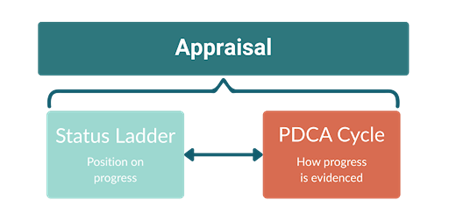
Figure 2: Relationship between the Status Ladder and PDCA
6.5.1 Status Ladder
The Status Ladder provides a common, plain-language way to describe where each recommendation is up to: from not yet started, to a recommendation being completed with evidence that change has been embedded.
Agencies indicate their current position using the ladder; the Implementation Monitor considers the accompanying evidence and, after discussions with agencies, may confirm or adjust the position with a short rationale.
The Status Ladder is outlined in Figure 3.

Figure 3: Status Ladder
Note about delayed or at-risk recommendations: Agencies will be able to indicate separately where a recommendation is delayed or at risk of delays anywhere on this Status Ladder.
Note about intent: Alignment with a recommendation’s intent is assessed at every level during appraisal (via relevance, credibility and sufficiency checks - see Section 6.6.3 for a further explanation of these checks); it is not specific to any single ladder position.
In addition to the five levels on the Status Ladder, there are two non-progress categories that can apply at any time to a recommendation.
- Closed: The recommendation is superseded, made redundant, or addressed by another recommendation. Closure requires a clear rationale and traceability; it is not used to avoid work that remains necessary to complete a recommendation in line with its intent.
- Unable to Assess: The Implementation Monitor may use this category when evidence is insufficient, unclear or low-quality to make a defensible appraisal. This is not a statement about progress; it prompts clarification and specifies what additional evidence is required. It will be used sparingly in reporting, with the Implementation Monitor first taking steps to resolve any reporting gaps with agencies. The Implementation Monitor may use its Compliance Notice powers to compel information in these circumstances.
6.5.2 PDCA (Plan–Do–Check-Act) Cycle
PDCA (as outlined in Figure 4) is the organising frame for the evidence that supports a stated position on the Status Ladder. Agencies use it to structure submissions, and the Implementation Monitor uses it to read the material consistently. It is a clear way to show what was intended, what happened, what changed in response, and what verifies this.
The PDCA is proportionate: the depth of evidence scales with the scope, risk and complexity of the recommendation.

Figure 4: Overview of the PDCA cycle with indicative inclusions
6.6 Detailed steps
This section outlines the appraisal steps in more detail.
6.6.1 Step 1: Initiate
An Appraisal Notice is issued to agencies for the preceding reporting period. It sets expectations for the period and keeps effort focused. The notice does three things:
- Confirms logistics, including formats and open/close dates for submissions
- Flags cross-cutting matters to address, for example, brief responses to sector themes or stakeholder feedback, shared enablers or barriers that multiple recommendations depend on, or minor clarifications to definitions/indicators
- Carries forward pending matters, for example, items noted in the previous reporting period that need further information.
6.6.2 Step 2: Submit
Agencies that receive an appraisal notice will provide an annual submission to the Implementation Monitor. This submission includes, for each recommendation, a self-reported Status Ladder level and the supporting evidence and information required, documented through the PDCA cycle.
A template to collect this baseline information, as well as the information collected during Step 3, is included in Appendix 2: Submission Template.
Note: There will be a transition period in 2026, which is detailed in Section 8.3.1 with differing reporting requirements.
At a glance - what the submissions from agencies will show:
- One overall self-reported Status Ladder level per recommendation
- A PDCA organised evidence set demonstrating the basis for the self-reported status level
- Support documentation where relevant e.g. project plans or evaluation reports
- Any other requests made in the Appraisal Notice.
Routine annual process
In routine years, Step 2 has two forms. In some cases, agencies will confirm a recommendation is maintained at its current position; in others, a proposed change to the status level will be proposed. This distinction matters because it changes how much and what kind of material the Implementation Monitor requests.
- Status Update (same level)
The agency confirms the current position remains the same and provides information as to what progress has been made during the reporting period, if any. The PDCA is used but is kept proportionate to the existing level. Supporting documentation is only included if requested in the Appraisal Notice or if an agency wishes to clarify a material point.
- Status Level Change (new level)
The agency self-reports a higher (or lower) level on the Status Ladder and demonstrates why this is warranted. A short rationale for the move is included, and a PDCA-organised evidence set calibrated to the new level being self-reported is provided, including supporting documentation (that is credible, relevant, and sufficient).
Using PDCA to organise evidence
PDCA elements are included where relevant to the stage of the recommendation’s implementation/ operation; not all sections will always need to be reported on.
- Plan – what is intended, who is accountable, scope/coverage and dependencies, and how the approach aligns to the recommendation’s intent. If the intent or approach has changed since the last reporting period, the submission notes the change briefly.
- Do – what was delivered in the reporting period across the stated scope, and the next concrete step/s.
- Check – the lightest verification that fits the stage the recommendation is at, e.g. readiness checks before implementation or operations begin, routine monitoring once changes are occurring, and, where appropriate, evaluation used to demonstrate durability or effectiveness.
- Act – adjustments made in response to learning, risks, or barriers; if none were needed, this is stated briefly.
Depth of PDCA
The depth to which agencies report on progress using the PDCA will change in relation to the scale and risk of a recommendation:
- Plan: brief confirmation for contained recommendations; additional information on coverage, governance, and key risks for broader reforms.
- Do: dated actions for smaller recommendations; delivery across all aspects of the stated scope for larger reforms.
- Check: readiness checks or light operational signals for smaller recommendations; stronger triangulation of evidence for larger reforms, e.g. monitoring, audits, evaluation.
- Act: short noteof tweaks for smaller recommendations; visible feedback loops and rationale for course corrections in larger reforms (including how lived experience and stakeholder input informed adjustments, as appropriate).
The Implementation monitor will work with agencies over time to ensure that expectations of reporting depth are clear.
Multi-part recommendations
When a recommendation has sub-recommendations, these will be treated separately:
- For each sub-recommendation, there will be a PDCA-organised evidence set provided by agencies.
- There will be one overall Status Ladder level for the recommendation derived from a synthesis of the reported levels across the active sub-recommendations (with a level also reported for each sub-recommendation).
6.6.3 Step 3: Appraise
The Implementation Monitor reviews each submission to form an independent, evidence-based assessment of the self-reported Status Ladder level. The approach is consistent across agencies and proportionate to the size, complexity and risk of the recommendation.
At a glance - what the appraisal involves:
- The Implementation Monitor reviews the submission as provided (including any Appraisal Notice items).
- Three decision checks are applied to the evidence: credibility, relevance, and sufficiency.
- An initial view is formed on agreement with the self-reported status level.
- Credibility – can the material be relied on?
Decision checks (used for every appraisal)
Evidence is dated, attributable, and traceable from each claim to a specific source, and it aligns with earlier reporting cycles or clearly explains changes.
- Relevance – is the material about this recommendation and this level?
Materials directly address the recommendation’s wording and intent, and come from the settings, systems or policy areas where change should show.
- Sufficiency – is there enough of the right kind of evidence?
- Credibility – can the material be relied on?
Taken together, the PDCA shows an adequate picture for this point in time: clear ownership and planning (Plan), real delivery (Do), fit-for-stage verification (Check), and recorded adjustments, as required (Act). Larger or higher-risk reforms show broader coverage and stronger verification; contained items can be evidenced more lightly.
An internal record of these decision checks is maintained for each recommendation. This information may be published in the Annual Report at the discretion of the Implementation Monitor.
Appraisal for different submission types
- Status Update (same level)
Tests whether the current level remains supported this cycle. The Implementation Monitor looks for proportionate PDCA updates since the last report and checks for any signs of regression.
- Status Level Change (new level)
Tests whether a move on the ladder is warranted now, based on the evidence provided.
Possible outcomes at this stage
- The self-reported level is accepted, and this decision is shared with the agency.
- The self-reported level is not accepted (at this point in time); the rationale is recorded, and the process moves to Step 4.
6.6.4 Step 4: Discuss
Step 4 is when the Implementation Monitor shares their initial view from Step 3 with the relevant agency and talks through any differences.
At a glance – what this step involves:
- A short, written summary of the initial view is provided to the agency, mapped to the three decision checks (credibility, relevance, sufficiency).
- A discussion is offered to clarify intent, scope/coverage, and explore any issues.
- Clarifications or additional materials are provided by the agency, as relevant.
How the discussion works:
- Prior to the meeting, the Implementation Monitor shares their initial view (agree/not agree/unable to assess) and the reasons for it.
- A discussion is held with a view to resolving misunderstandings, checking alignment with the recommendation’s intent, and exploring how the PDCA and supporting documentation support the claimed level.
- For multi-part recommendations, the conversation may cover sub-recommendations, and how the overall position has been derived.
The Implementation Monitor will document a summary of the discussion to inform Step 5.
6.6.5 Step 5: Record
Step 5 confirms the Implementation Monitor’s decision on each recommendation’s Status Level, and records it in a consistent, traceable way.
At a glance – what this step involves:
- The Implementation Monitor confirms the Status Level for each recommendation (and sub-recommendation where applicable).
- A concise rationale mapped to the three decision checks (credibility, relevance and sufficiency) and the PDCA is recorded.
- Any differences between the agency’s self-report and the Implementation Monitor’s, and the reasons for this, are recorded.
- Special categories - Closed or Unable to assess - are recorded, if relevant.
What is shared with agencies
A brief confirmation stating the Implementation Monitor’s final Status Level for the recommendation, and the high-level rationale, is shared with agencies.
Outcome
The outcomes of this step then form part of the annual reporting process outlined in Section 8.
6.6.6 Step 6: Track
Step 6 is the watching brief that the Implementation Monitor maintains between annual submissions, so material changes aren’t missed, and durability claims remain credible.
At a glance – what this step involves:
- Scanning for, and receiving, credible information relevant to recommendations e.g. stakeholder inputs, complaints data, system monitoring.
- If a matter is material, either (a) including a focused item in the next Appraisal Notice, or (b) raising it directly with the responsible agency for context and clarification.
- Considering any new information against the Step 3 decision checks (credibility, relevance, sufficiency) and the recommendation’s intent.
- Noting what was observed, why it matters, and how it will be handled.
When a previously ‘completed’ recommendation is affected
If new, credible information suggests a recommendation that was marked Completed or Embedded Change may no longer be at this level, the Implementation Monitor may:
- Note the issues and write to the agency outlining the concern and the specific information needed to resolve it
- Discuss the matter (Step 4) as warranted
- Review the response received against the decision checks (credibility, relevance, sufficiency)
- Consider whether to reopen the recommendation for reassessment at the next appraisal point (or earlier if warranted).
In doing so:
- Only credible, relevant information is actioned; isolated or unsubstantiated claims do not automatically trigger review
- Where essential information is not available through ordinary channels, formal information-gathering powers may be used, applied proportionately to the issue
- Matters reopened have a clear rationale documented, and this is publicly reported.
The Implementation Monitor reserves the right to examine recommendations at any time between reporting cycles where a credible signal arises.
Royal Commission into Institutional Responses to Child Sexual Abuse recommendations
Per s 12 of the Child Safety Reform Implementation Monitor Act 2024, the Implementation Monitor is required to provide oversight of implementation of those recommendations from the Royal Commission into Institutional Responses to Child Sexual Abuse that meet the conditions below:
were presented to the Governor-General on 15 December 2017, that –
(i) were accepted by the Tasmanian Government in the response tabled in Parliament in June 2018; and
(ii) in the opinion of the Implementation Monitor, have yet to be implemented on the day on which this section commences
This requires the Implementation Monitor to consider which recommendations were captured and yet to be completed on the day they were appointed. As of 2 December 2025, 58 recommendations met the conditions outlined above. However, s 12(1)(b)(ii) of the Act allows the Implementation Monitor to come to their own conclusion about the completeness of accepted recommendations that were reportedly implemented before their appointment. This means the number of recommendations being monitored may change over the duration of the Implementation Monitor’s period in office. The Implementation Monitor reserves the right to review these completed recommendations at a future date to test their completeness.
7 Evaluation
7.1 Types of evaluation
The Implementation Monitor will use different types of evaluation to support their work, depending on the question/s that need answering. For example:
- Process evaluation: examines how an activity was delivered and whether it reached the right people in the right way. It is useful when delivery, quality, reach, or fidelity is in question.
- Outcome evaluation: looks at the short to medium-term changes expected following good implementation. It is useful when early results need to be confirmed and understood.
- Impact evaluation: assesses longer-term effects, including whether changes were sustained and made a meaningful difference at a system or population level. It is useful when longer-term, system-level changes and durability need to be demonstrated.
7.1.1 When each type is used
In general, process questions come first, followed by outcome questions, and then impact questions. However, this sequence is a guide, not a rule, and how and when evaluation is used will be at the discretion of the Implementation Monitor.
7.1.2 How evaluation fits with the rest of the Framework
Evaluation has an important relationship with monitoring and appraisal, as shown in Figure 5.
Figure 5: Relationship between evaluation, monitoring and appraisal
Some examples of when monitoring and appraisal can inform evaluation include:
- Conflicting or unclear evidence: key indicators or sources don’t line up, and it affects a status or priority decision.
- High-risk area with uncertainty: signals are weak or mixed, and the Implementation Monitor needs to give assurance.
- Major decision, not enough evidence: more certainty is needed before changing priority or approach.
- Regression: progress has slipped back, and the cause isn’t clear.
- Dependencies are not holding: critical assumptions in the Theory of Change look uncertain and may be blocking outcomes.
- High public interest: the issue needs more certainty or transparency than routine monitoring can provide.
7.2 The Implementation Monitor’s approach to evaluation
Evaluation sits alongside monitoring and appraisal as a targeted tool and is used when findings point to unanswered questions about causes, effects, or what should happen next. The Implementation Monitor takes a proportionate approach, drawing first on credible existing evidence, and only undertaking or commissioning an evaluation when the available evidence is insufficient in relevance or credibility and a targeted review would add clear value.
7.2.1 Who leads the evaluation
Once the type of evaluation has been identified (process, outcome, impact), the Implementation Monitor will decide whether to undertake the evaluation internally or outsource it to an external evaluator. The choice of approach depends on risk, urgency, scope, available resources, and the level of independence required.
Internal evaluation
An internal evaluation is a short, tightly scoped inquiry led by the Implementation Monitor to resolve practical questions that routine monitoring and appraisal cannot settle. It is suited to rapid assurance, course-correction, clarifying intent, or explaining small variations. This approach is typically applied to contained issues with short timelines where the primary need is operational clarity rather than full assessment. This form of evaluation may or may not lead to a publicly facing report.
Commissioned evaluation
A commissioned evaluation is a deeper, method-robust study – often undertaken by an evaluation specialist – used where risk is material, impacts span multiple agencies, issues are contested, or independence is essential. In practice, this is most likely in the lead-up to the Year 5 and Year 10 synthesis reports to bring together a fuller view of progress, gaps and risks, and successes that sit beyond the annual reporting periods. Outputs are formal reports that set out evaluation questions, methods, analysis, findings and limitations, with findings or recommendations where appropriate. These reports will be made publicly available unless the Implementation Monitor determines it is in the public interest not to do so.
8 Activity and Reporting Timeline
This section outlines the yearly cadence (timelines) for the Implementation Monitor’s work and outputs.
Figure 6 presents an overview of when monitoring, appraisal, and evaluation will occur across the Implementation Monitor’s 10-year role.
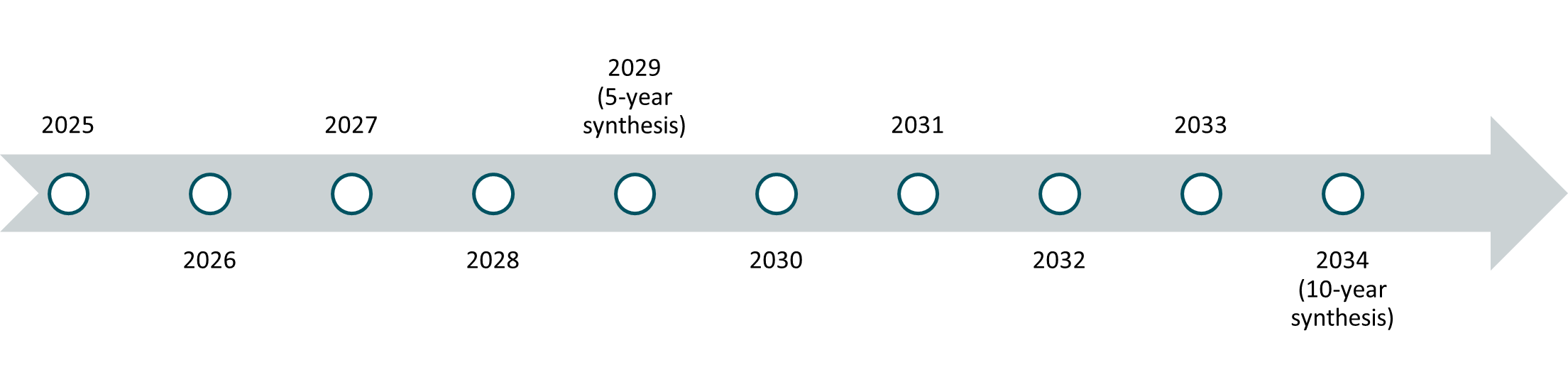

Evaluation timelines are indicative only. As described, process evaluation questions might be posed beyond the first two years, and outcome evaluation may occur earlier than the third year.
The Implementation Monitor may also choose to undertake additional monitoring or evaluation outside of this planned process.
8.1 Data collection
In line with the activities outlined above, data collection for appraisal, monitoring and evaluation will occur cyclically. Table 9 outlines a high-level overview of data collection. As described, data collected will primarily be a mix of administrative, primary and secondary data, as outlined in Section 5.
Table 9: High-level overview of data collection
Focus | To be collected | Activity outlined in |
|---|---|---|
Data from agencies for appraisal | Between April and August each year | Section 6 – Recommendation Appraisal Process |
Monitoring data | Throughout each year (up until the end of June) | Section 5 – Indicators and Measures |
Other data to inform the work of the Implementation Monitor | As needed | Not applicable |
Evaluation | As needed to inform the 5 and 10-year syntheses At the discretion of the Implementation Monitor. | Section 7 - Evaluation |
8.2 Reporting products
There are three main reporting products delivered by the Implementation Monitor:
- Annual Reports (currently published in October each year)
- This report is the account of progress and issues surrounding the rollout of the reforms over the specified period. It focuses on routine monitoring against the Theory of Change outcomes and indicators (as relevant to the point in time, noting that not all indicators will be measured from the start, and others may be retired), and provides an overview of progress towards each individual recommendation.
- As per the Act, each report is to be submitted to the Minister and the Secretary by 30 September in each calendar year, relating to the 12-month period ending on 30 June in that calendar year. Note: The Implementation Monitor is actively considering revised timelines to facilitate deeper engagement with government agencies and better align with reporting cycles. If these revised timelines are approved by Parliament, then the annual report will be submitted by 30 October instead of 30 September, and all dates will be adjusted accordingly and confirmed in the 2026 Annual Report.
- While it will provide commentary and analysis of progress made throughout the reporting period, its focus will be on monitoring and appraisal. The broader system-level impact and outcomes evaluation will be mainly reserved for the 5 and 10-year syntheses.
- Year 5 – Periodic report - Midterm Synthesis (Outcome-leaning):
- This report will focus on the period 26 September 2023 – 2028 and must be published by 26 September 2029.
- This report will focus on the medium-term outcomes of reform. It will synthesise any evaluation/s undertaken, outline any cross-domain analysis undertaken, and provide recommendations.
- It may be presented in a standalone report or form part of the Year 5 Annual Report.
- Year 10 – Periodic Report - Final Synthesis (Impact-leaning):
- This report will focus on the period 26 September 2023 – 2033 and must be published by 26 September 2034.
- This report will focus on the long-term effectiveness and sustainability of reforms, system-level effects on the prevention, response and support for institutional child sexual abuse or other abuse, and unintended impacts.
- Other reports and papers may also be published at the Implementation Monitor’s discretion.
8.3 Appraisal and reporting timeline
Table 10 outlines key milestones in the appraisal timeline, from when the request for information is made to when the report is published.
The Implementation Monitor is required to deliver an annual report for the period from 1 July of the previous year to 30 June each year.
An appraisal notice will be issued by the Implementation Monitor in March, stipulating the agencies' reporting requirements.
Agencies collect and report against the required data. Agencies then submit their data through their governance and clearance processes which can take up to six weeks.
Once the data is received by the Implementation Monitor, it is organised and appraised and then used for the drafting of the annual report.
To allow for all the necessary processes, the data is collected up to 30 April, which is prior to the end of the reporting period. To bridge this gap, agencies will report the actual recommendation status as at 30 April. Where material changes to implementation are expected in May or June, agencies may also outline these in their submission. Prior to 14 July, they will provide follow-up data confirming these outcomes through an expedited process.
Any data provided beyond these dates or outside specific processes that exist to resolve recommendations with a contested status will not be included in the current year’s appraisal process.
Table 10: Appraisal and Reporting Timeline
Month | Activity / Milestone | Primary owner | Description |
|---|---|---|---|
March | Appraisal Notice issued | Implementation Monitor | Formal request and guidance circulated (Appraisal Notice). |
May / June | Evidence Compilation | Agencies | Evidence submission prepared in line with Appraisal Notice and associated templates. |
June | Analysis of additional indicator monitoring data | Implementation Monitor | Analysing all monitoring data collected during the year (noting not all indicators will be measured each year), that is not agency-submitted evidence, preparing these results for inclusion in the Annual Report. |
June | Evidence submission closes | Agencies | Evidence submission lodged via agreed channel. |
June / July | Appraisal and related processes:
| Implementation Monitor / Agencies |
|
July | Annual Report drafting | Implementation Monitor | Drafting the report on the progress of recommendation implementation. |
August | Annual Report draft shared with agencies for feedback | Implementation Monitor / agencies | Implementation Monitor shares draft of Annual Report for agency feedback. |
August/September | Analysis of feedback and finalisation of the report | Implementation Monitor | Final draft, formatting and printing. |
September | Annual report submitted to the Attorney General | Implementation Monitor | Submission so that the report can be tabled in Parliament. |
October | Annual report published | Implementation Monitor | Annual report published in the public domain. |
8.3.1 2026 Transition
2026 will operate as a transition year before things move to a business-as-usual cadence in 2027. There will be two data collections in 2026: the first will be to collect information and evidence about all ‘completed’ recommendations in scope for the Implementation Monitor; the second will capture all other recommendations that are in progress, or any recommendations where a status change is being reported.
8.4 Reporting compliance with timelines
The Implementation Monitor is required to report on compliance with recommendation completion timeframes, where they were specified in the relevant reform report or the Implementation Framework. As this is a legislative requirement, the Implementation Monitor will provide the required reporting, but in their analysis and commentary, will prioritise outcomes over timelines.
9 Ongoing Stakeholder Engagement
The Implementation Monitor will develop a Stakeholder Engagement Strategy that sets out their approach to ongoing engagement with victim-survivors, children and young people, non-government organisations, government agencies and the broader community in more detail. Building trust and trusted relationships takes time. The Implementation Monitor will continue to seek opportunities to engage with a range of stakeholders. As a starting point, ongoing stakeholder engagement will include:
- An annual stakeholder survey (as set out as a monitoring data source)
- An annual public submissions process, through which individuals, including victim-survivors, their supporters and families will have the opportunity to provide feedback to the Implementation Monitor on perceived reform progress
- Engagement with victim-survivors, invited through existing groups where possible such as:
- The Tasmanian Children’s Safety Advisory Group
- Community sector organisations like Laurel House and Sexual Assault Support Service (SASS)
- Engagement with children and young people, invited through existing groups such as the:
- Voices for Tasmanian Youth
- Premier’s Youth Advisory Council (PYAC)
- COI Aboriginal Reference Group (once established)
- Regular meetings and targeted discussions with community sector organisations and peak bodies
- Structured ongoing engagement with other oversight bodies, such as the:
- Commissioner for Children and Young People (CCYP)
- Independent Regulator (OIR)
- Aboriginal Commissioner (once appointed)
- Disability Commissioner
- Ombudsman
- Custodial Inspector
- Integrity Commissioner.
- Regular meetings and briefings with Government agencies and provision of information as set out under this Framework.
- Engagement with other individuals or groups as determined by the Implementation Monitor.
Where possible the Implementation Monitor will seek to engage with stakeholders through existing systems, processes and mechanisms to prevent duplication and risk of consultation fatigue. When separate processes are established, these will be in recognition of the need to maintain independence and oversight. Certain individuals and groups who may not otherwise contribute to Government consultation, may wish to do so with the Implementation Monitor.
Engagement will be targeted to the decision at hand, proportionate, and time-bound. Where possible, plain language materials will be used, and engagement will be trauma-informed and culturally safe.
Feedback will be sought from engaged stakeholders at least annually, in line with established processes, principles and the relevant indicators and measures set out in this Framework.
10 Governance and Risk
10.1 Framework Governance
Governance clarifies who decides what, who does what, and how reporting products stemming from this Framework maintain quality and independence. These arrangements ensure the Framework is applied consistently, changes are controlled and transparent, and reporting remains credible, safe, and useful.
Decision rights are as follows:
- Approach to appraisal, monitoring and evaluation: The Implementation Monitor approves and publishes the approach, as set out in this Framework.
- Reporting: The Implementation Monitor holds editorial control over findings and other commentary made in its annual and other reporting. This does not include reports written by external evaluators who have led independent evaluation projects.
- Changes to the Framework: The Implementation Monitor approves amendments or substitutions to the Framework in consultation with agencies and other stakeholders, as outlined in Section 10.2 below.
10.2 Continuous Improvement of the Framework
The Implementation Framework is iterative. As evidence, context and needs change, what is measured, how information is appraised, and the tools used may change. Any refinements will be proportionate, transparent and informed by targeted engagement, so the Framework remains accurate, practical, and easy to understand. The Theory of Change is treated as a living document and is reviewed on a regular cycle or when clear triggers arise.
Periodically, the Implementation Monitor will conduct a light-touch review of the Framework (including the Theory of Change) to confirm it remains fit-for-purpose. A comprehensive review will be undertaken post the Year 5 synthesis report, if required, with other updates made where material changes warrant them.
10.2.1 When changes are considered
Revisions are considered when evidence points to a need, for example:
- Persistent data gaps or inconsistencies
- Stakeholder feedback
- New or improved datasets becoming available
- Policy or legislative changes
- Indicators flagging concerns over more than one reporting cycle.
10.2.2 How changes are made
The Implementation Monitor approves all changes. They may seek advice from relevant stakeholders, where their input would improve the quality, feasibility, or legitimacy of a proposed change.
When a change is proposed, the Implementation Monitor uses a simple, documented pathway:
- Proposal: a short note outlines the change, why it’s needed, and any effect on comparability with previous results.
- Impact check: burden (on agencies or other stakeholders), accessibility, feasibility and data quality are assessed.
- Targeted input: the stakeholders most affected are consulted as needed (proportionate to the change).
- Consultation with agencies: As per the obligations set out in the Act, agencies are consulted on any amendments or substitutions being proposed.
- Decision and record: the ImplementationMonitor decides, and the decision is documented with a rationale and effective date.
- Implementation: the change is made to the Framework and explained in the next Annual Report.
10.3 Roles and responsibilities
- Implementation Monitor: Owns, implements and maintains the Implementation Framework and produces the Annual Report and Year 5 and Year 10 syntheses.
- Agencies: Provide relevant, sufficient and credible evidence and information via the process set out in the Framework.
- Parliament: Receives the Implementation Monitor’s reports and holds the government to account for reform progress. Parliament may also expand, or cease, the role of the Implementation Monitor.
- Stakeholders: Provide advice on the Framework and its associated processes, as requested.
- External evaluators: Deliver independent evaluationsthat meet the Implementation Monitor’s requirements.
Planning for any projects under this Framework will include a more detailed governance approach.
10.4 How information submitted through the appraisal process is handled
Any supporting documentation provided by agencies may or may not be published depending on its type, sensitivity, and relevance: where material is confidential, sensitive, or personal, the Implementation Monitor will rely on it for appraisal but publish only de-identified extracts, aggregated results, or a citation/description, where appropriate. All handling is trauma-informed and privacy-protective, consistent with legal and security obligations.
10.5 Data governance
There are clear rules set for how information used by the Implementation Monitor is collected, handled, analysed and reported. A high-level summary is recorded here. Further details and the operationalisation of these will be done by the Implementation Monitor.
Standards will be developed where needed, in addition to existing Tasmanian Government data handling and privacy standards.
Roles
- Implementation Monitor (data custodian): sets standards, approves data requests, manages secure storage and role-based access, and maintains the change log.
- Agencies (data providers): supply data/evidence to agreed definitions and timeframes, flag quality issues or changes.
- External evaluators (when commissioned): meet the Implementation Monitor’s standards, return/destroy data on completion, document methods and limitations.
10.6 Risk management
The following table highlights the high-level risks identified for the Implementation Framework.
Table 11: Implementation Framework Risks
Risk | What it could look like | Primary controls |
|---|---|---|
Independence and scope | Pressure to soften findings; scope creep beyond remit; unresolved conflicts of interest | Published Implementation Framework; Decision logs; Protected editorial control over reports |
Safety and ethics | Harm or burden to victim-survivors, children and young people; culturally unsafe or a lack of trauma-informed engagement | Child-safe, trauma-informed, culturally safe protocols; informed consent |
Data quality and access | Poor data integrity; privacy breaches; inconsistent definitions; delayed reporting | Data sharing agreements; Indicator Reference Library; secure storage and access controls |
Methodological credibility | Over-claiming impact; weak triangulation; unclear limitations | Appraisal criteria; statements of limitations; independent peer review for mid/end-term reports |
Operational capacity | Resourcing/ capability gaps; schedule slippage affecting statutory outputs | Phased planning; workflow management; capability development |
Stakeholder trust and communications | Misinterpretations; politicisation; falling confidence in public reporting | Plain-language products; media protocols; response processes. |
The Implementation Monitor will further develop a risk management approach to guide implementation and manage risks.
Appendix 1 Indicator Reference Library
Table 12: Reference Tables
Indicator 1: Name of Indicator | |
|---|---|
Description | One or two sentences explain what the indicator shows |
Measures | How the indicator will be observed or counted |
Numerator | What is being counted for a quantitative measure (where relevant) |
Denominator | The total group relevant to the measure (where relevant) |
Calculation Method | The formula or rule for turning data into the measure |
Data Sources | Where the data comes from |
Data Collection Method or Tool | How the data is gathered and by whom |
Frequency of Data Collection | How often the data is collected |
Baseline Value | The first recorded value (with date) to compare future results against |
Disaggregation | Breakdowns to show equity or context |
Notes | Definitions, interpretation guidance, and potential review triggers. |
Indicator 1: Trust in the Implementation Monitor’s oversight | |
|---|---|
Description | The extent to which informed stakeholders report trust that the Implementation Monitor is adequately overseeing implementation, and the reasons behind their view. |
Measures | 1a. Number (#) and Percentage (%) of informed stakeholders reporting trust that the Implementation Monitor is adequately overseeing implementation 1b. Qualitative themes – why/why not. |
Numerator | 1a. Count of informed stakeholders 1b. Not applicable. |
Denominator | 1a. All informed stakeholders who answered the trust questions (exclude don’t know / N/A) 1b. Not applicable. |
Calculation Method | 1a. % high trust = (Numerator/Denominator) x 100; report % and n, show % disagree for balance if helpful 1b. Thematic coding. Summarise with brief quotes where appropriate. |
Data Sources | Annual stakeholder survey Other stakeholder engagement processes - To be determined. |
Data Collection Method or Tool | Online survey to an informed stakeholder list (maintained by the OIM) |
Frequency of Data Collection | Annual (same timing each year) |
Baseline Value | 1a. To be determined at first survey 1b. Baseline themes recorded at first survey. |
Disaggregation | Where it is safe (apply suppression for groups <5) and meaningful, stakeholder type, region, engagement level. |
Notes Definitions:
Interpretation: Healthy monitoring is stable and improving trust, with themes referencing visible oversight, clear explanations, and fairness across stakeholder groups. Review triggers:
| |
Indicator 2: Perceived independence | |
|---|---|
Description | The extent to which informed stakeholders agree that the Implementation Monitor’s decisions are free from undue influence e.g. political or agency pressure, and the reasons behind their view. |
Measures | 2a. # and % of informed stakeholders agreeing that the Implementation Monitor’s decisions are free from undue influence. |
Numerator | 2a. Count of informed stakeholders selecting Agree or Strongly Agree. |
Denominator | 2a. All informed stakeholders who answered the independence question (exclude Don’t Know / N/A). |
Calculation Method | 2a. % agree = (Numerator/Denominator) x 100; report % and n; show % disagree if helpful |
Data Sources | Annual stakeholder survey Other stakeholder engagement processes - To be determined. |
Data Collection Method or Tool | Online survey to an informed stakeholder list (maintained by the OIM) |
Frequency of Data Collection | Annual (same timing each year) |
Baseline Value | 2a. To be determined at first survey |
Disaggregation | Where it is safe (apply suppression for groups <5) and meaningful, stakeholder type, region, engagement level. |
Notes Definitions:
Interpretation: Healthy monitoring is stable and improving agreement, with themes referencing transparent methods and sound evidence. Review triggers:
Spike in ‘Don’t know’ indicating low independence-literacy. | |
Indicator 3: Confidence in transparent use of powers | |
|---|---|
Description | The extent to which informed stakeholders agree that the Implementation Monitor uses its powers transparently, and the reasons behind their view. |
Measures | 3a. # and % of informed stakeholders agreeing that the Implementation Monitor’s powers are used transparently. |
Numerator | 3a. Count of informed stakeholders selecting Agree or Strongly Agree. |
Denominator | 3a. All informed stakeholders who answered the independence question (exclude Don’t Know / N/A). |
Calculation Method | 3a. % agree = (Numerator/Denominator) x 100; report % and n; show % disagree if helpful |
Data Sources | Annual stakeholder survey Other stakeholder engagement processes - to be determined. |
Data Collection Method or Tool | Online survey to an informed stakeholder list (maintained by the OIM) |
Frequency of Data Collection | Annual (same timing each year) |
Baseline Value | 3a. To be determined at first survey |
Possible disaggregation | Where it is safe (apply suppression for groups <5) and meaningful, stakeholder type, region, engagement level. |
Notes Definitions:
Interpretation: Healthy monitoring is stable and improving agreement, with themes referencing clear criteria, clear reasons, and like issues treated similarly. Review triggers:
| |
Indicator 4: Information-gathering powers | |
|---|---|
Description | The extent to which the Implementation Monitor uses its formal statutory information-gathering powers and the responsiveness of agencies to those powers, including transparency about compliance and documented cases where compliance is not reasonably possible. |
Measures | 4a. # of compliance notices issued, by agency 4b. # and % of compliance notices complied with within 21 days of receiving the notice, by agency 4c. # and % of compliance notices where the Implementation Monitor is satisfied the agency is unable to comply with the notice, by agency 4d. # of instances where the Implementation Monitor used powers of entry and inspection, by agency. |
Numerator | 4a. Count of compliance notices issues within the reporting period, by agency 4b. Count of notices complied with within 21 days of receiving the notice, by agency 4c. Count of notices where the Implementation Monitor recorded a formal decision that the agency was unable to comply, by agency 4d. Count of discrete uses of formal entry/inspection powers (site visits conducted), by agency. |
Denominator | 4a. Not applicable 4b. All compliance notices issued in the period, excluding notices withdrawn or still open at the end of the period, by agency 4c. All compliance notices issued in the period, excluding notices withdrawn or still open at the end of the period, by agency 4d. Not applicable. |
Calculation Method | 4a. Report count by agency and total 4b. % complied = (Numerator/Denominator) x 100; report % and n; show # still open and # withdrawn for context (if relevant) 4c. % unable to comply = (Numerator/Denominator) x 100; also report primary reason categories 4d. Report count and brief purpose categories e.g. routine verification, targeted follow-up. |
Data Sources | OIM administrative data e.g. correspondence records, entry/inspection visit logs. |
Data Collection Method or Tool | Administrative data extract |
Frequency of Data Collection | Quarterly internal monitoring (suggestion – To be determined by OIM); annual public reporting (same time each year) |
Baseline Value | 4a-4d. To be established in Year 1 |
Possible disaggregation | Agency, reasons for ‘unable to comply’, inspection purpose. |
Notes Definitions:
Interpretation: Healthy monitoring is high and steady or improving compliance with notices; declining ‘unable to comply’ decisions as barriers are addressed; and low, formal entry/inspection tied to clear triggers. There may be more notices (4a) in early days as processes bed down, before stabilisation. Review triggers:
| |
Indicator 5: Contested status of recommendations | |
|---|---|
Description | The extent to which the Implementation Monitor contests agencies’ self-reported implementation status during appraisal, and the main reasons for contesting. |
Measures | 5a. # and % of contested recommendations where the Implementation Monitor disagrees with the agency's self-reported implementation status - Total - Inquiry - Agency 5b. # and % of contested recommendations by main reason: not enough evidence (sufficiency), not the right evidence (relevance), not reliable evidence (credibility), to support the self-reported implementation status. |
Numerator | 5a. Count of recommendations contested in the period 5b. Count of contested recommendations coded to each primary reason (sufficiency/relevance/credibility). |
Denominator | 5a. All recommendations appraised by the Implementation Monitor in the reporting period 5b. All contested recommendations in the reporting period. |
Calculation Method | 5a. % contested = (5a Numerator/Denominator) x 100. Report total and breakdowns by Inquiry and Agency (include n) 5b. For contested items, % by reason = (5b Numerator/Denominator) x 100. |
Data Sources | Appraisal register |
Data Collection Method or Tool | Administrative extract from the appraisal register |
Frequency of Data Collection | Annual public reporting (same time each year) |
Baseline Value | 5a/b. To be determined at first full reporting year |
Possible disaggregation | Inquiry, agency, recommendation priority (if used), self-reported status category. Apply suppression where groups <5. |
Notes Definitions:
Interpretation: Healthy monitoring is a clear, consistent application of evidence standards, with contestation stabilising as agencies calibrate to guidance and templates, and reasons shifting away from ‘sufficiency’ over time (indicating more complete submissions), and credibility concerns reducing through better corroboration. Review triggers:
| |
Indicator 6: Resolution of contested status of recommendations | |
|---|---|
Description | The extent to which previously contested status of recommendations progress between reporting cycles. |
Measures | 6a. # and % of recommendations status contested in the last reporting cycle that are no longer contested. |
Numerator | 6a. Count of previously contested recommendations which match the Implementation Monitor’s allotted status this cycle (relative to last cycle) and with documented new evidence. |
Denominator | 6a. All recommendations for which the status were contested in the last reporting cycle and received a current-cycle Implementation Monitor decision (exclude items not re-appraised yet). |
Calculation Method | 6a. % changed status = (6a Numerator/Denominator) x 100; report % and n |
Data Sources | Appraisal register |
Data Collection Method or Tool | Administrative extract from the appraisal register |
Frequency of Data Collection | Annual (same timing each year) |
Baseline Value | 6a. To be determined at first full reporting year |
Possible disaggregation | Inquiry, agency, recommendation priority (if used), primary reason for context (sufficiency/relevance/credibility). |
Notes Definitions:
Interpretation: Healthy monitoring is fewer recommendations remaining contested across cycles. Review triggers:
| |
Indicator 7: Assessment of conditions that enable Implementation | |
|---|---|
Description | Assessment of conditions that enable implementation. |
Measures | 7a. The Implementation Monitor’s qualitative judgment on whether agencies were adequately funded, staffed, and supported to deliver reforms. |
Numerator | 7a. Not applicable |
Denominator | 7a. Not applicable |
Calculation Method | 7a. Record Yes/No and short statement |
Data Sources | Discussions with agencies and community sector organisations |
Data Collection Method or Tool | Administrative extract, follow-up with agencies |
Frequency of Data Collection | Annual |
Baseline Value | 7a. To be determined in first full reporting year |
Possible disaggregation | Agency |
Notes Definitions:
Interpretation: Healthy monitoring implies the inclusion of assurance notes confirming adequate agency resourcing at the qualitative level. Review triggers:
| |
Indicator 8: Perceived stronger government accountability because of the Implementation Monitor’s oversight | |
|---|---|
Description | The extent to which informed stakeholders agree that government accountability is being strengthened because of the Implementation Monitor’s oversight, and the reasons behind their view. |
Measures | 8a. # and % of informed stakeholders agreeing that government accountability is being strengthened because of the Implementation Monitor’s oversight 8b. Qualitative themes – why / why not. |
Numerator | 8a. Count selecting Agree or Strongly agree 8b. Not applicable. |
Denominator | 8a. All informed stakeholders who answered the accountability item (exclude ‘Don’t know’) 8b. Not applicable. |
Calculation Method | 8a. % agree = (Numerator/Denominator) x 100; report % an n; show % disagree for balance if helpful 8b. Thematic coding; summarise with brief quotes where appropriate. |
Data Sources | Annual stakeholder survey |
Data Collection Method or Tool | Online survey to an informed stakeholder list (maintained by the OIM) |
Frequency of Data Collection | Annual (same timing each year) |
Baseline Value | 8a. To be determined at first survey 8b. Baseline themes recorded at first survey |
Possible disaggregation | Stakeholder type, region, engagement level. |
Notes Definitions:
Interpretation: Healthy monitoring is stable or improving agreement that the Implementation Monitor’s oversight strengthens government accountability, with themes citing clearer public reporting, timely responses to findings, corrective actions taken, and visible follow-through on commitments. Review triggers:
| |
Indicator 9: On-time response to the Implementation Monitor | |
Description | The extent to which the Implementation Monitor’s requests (including follow-ups) that specify a timeline receive a substantive response by the due date. |
Measures | 9a. # and % of the Implementation Monitor’s requests/follow-ups that receive a substantive response, where a timeline is specified. |
Numerator | 9a. Count of requests/follow-ups with a specified due date that received a substantive response by the due date (or by an approved extension granted before the due date). |
Denominator | 9a. All requests/follow-ups with a specified due date whose due date falls within the reporting period. |
Calculation Method | 9a. % on-time substantive response = (Numerator/Denominator) x 100; report % and n |
Data Sources | Appraisal register |
Data Collection Method or Tool | Administrative extract from appraisal register |
Frequency of Data Collection | Quarterly internal monitoring (suggestion – to be determined by OIM); annual public reporting (same time each year) |
Baseline Value | 9a. To be determined at first full reporting year |
Possible disaggregation | Agency, request type, priority level (if used). |
Notes Definitions:
Interpretation: Healthy monitoring is a high or stable (or improving) share of on-time substantive responses, with transparent use of extensions where justified, and a declining share of late responses over time as expectations and templates bed down. Review triggers:
| |
Indicator 10: Feedback or corrective actions | |
|---|---|
Description | The extent to which feedback and corrective actions issued by the Implementation Monitor in the prior reporting cycle have been addressed by agencies in the current cycle, as well as an updated list of actions for the next cycle. |
Measures | 10a. # and type of proposed corrective actions and feedback items for the next cycle. 10b. # and % of feedback items and corrective actions from the prior reporting cycle that are addressed in the current reporting cycle. |
Numerator | 10a. Count and description (type) of proposed corrective actions and feedback items for the next cycle 10b. Count of prior-cycle feedback items that are addressed this cycle. |
Denominator | 10a. Not applicable 10b. All actionable feedback items issued in the prior cycle that are due to be addressed in the current cycle (exclude items not yet due, withdrawn, or closed for another reason). |
Calculation Method | 10a. Numerator only (no ratio) 10b. % addressed = (Numerator/Denominator) x 100; report % and n |
Data Sources | Appraisal register |
Data Collection Method or Tool | Administrative extract from appraisal register |
Frequency of Data Collection | Annual (same time each year) |
Baseline Value | 10a. Not applicable 10a. To be determined at first full reporting year. |
Possible disaggregation | Agency, feedback category, priority level (if used). |
Notes Definitions:
Interpretation: Healthy monitoring is a high or stable (or improving) share of prior-cycle feedback items addressed, as guidance, templates and agency capability mature. Review triggers:
| |
Indicator 11: Role of oversight in delivery of long-term outcomes | |
|---|---|
Description | Thematic analysis of the oversight function as an enabler in relation to the effective and efficient implementation of recommendations. |
Measures | 11a Thematic analysis of the oversight function as an enabler in relation to the effective and efficient implementation of recommendations. |
Numerator | 11a. Not applicable. |
Denominator | 11a. Not applicable |
Calculation Method | 11a. Analysis of oversight enablement themes |
Data Sources | Long-term outcomes from Domain 2 – 5 Evaluation |
Data Collection Method or Tool | At Year 8/10; targeted evaluation. |
Frequency of Data Collection | At Year 8/10 |
Baseline Value | 11a. Not applicable |
Possible disaggregation | Inquiry, agency. |
Notes
Definitions:
- Enablers: Factors related to the OIM’s oversight function which are reported as key in the delivery of the recommendations.
- Effective and efficient implementation: changes that are fit-for-purpose and produce the intended effect (effective) with minimal avoidable delay, duplication or cost (efficient), relative to context.
Interpretation:
- Healthy monitoring is a clear line of sight from specific oversight practices to credible improvements in how recommendations were implemented. The narrative should show how and when oversight made a difference, with acknowledgement of limitations. Results should be read with consideration to context shifts over the period being evaluated.
Review triggers:
- Not applicable.
Indicator 12: Implementation status, reported by agency | |
|---|---|
Description | The distribution of recommendation status levels as self-reported by agencies, summarised by the appraisal process, by inquiry and agency. |
Measures | 12a. # and % of recommendations by status level, by: - Total - Inquiry - Agency |
Numerator | 12a. Count of recommendations at each status level, by total/inquiry/agency. |
Denominator | 12a. All recommendations with an agency-reported status |
Calculation Method | 12a. % in status = (Numerator/Denominator) x 100; present counts and %; show movement since last period where helpful |
Data Sources | Appraisal Register |
Data Collection Method or Tool | Agency submissions captured in the Appraisal Register; administrative extract. |
Frequency of Data Collection | Annual |
Baseline Value | 12a. To be determined at first full reporting year |
Possible disaggregation | Status level, inquiry, agency, recommendation. |
Notes Definitions
Interpretation: Healthy monitoring shows steady movement towards higher status levels over time, with clear rationales for any delays. Review triggers:
| |
Indicator 13: Implementation status, reported by Implementation Monitor | |
|---|---|
Description | The distribution of recommendation status levels as assessed by the Implementation Monitor through the appraisal process and recorded in the Appraisal Register, by inquiry and agency. |
Measures | 13a. # and % of recommendations by status level, by: - Total - Inquiry - Agency |
Numerator | 13a. Count of recommendations at each status level as determined by the Implementation Monitor, by total/inquiry/agency. |
Denominator | 13a. All recommendations appraised by the Implementation Monitor |
Calculation Method | 13a. % in status = (Numerator/Denominator) x 100; show movement since last period where helpful |
Data Sources | Appraisal Register |
Data Collection Method or Tool | Appraisal decisions recorded in the Appraisal Register; administrative extract. |
Frequency of Data Collection | Annual |
Baseline Value | 13a. To be determined at first full reporting year |
Possible disaggregation | Status level, inquiry, agency, recommendation. |
Notes Definitions:
Interpretation: Healthy monitoring uses differences between Indicators 12 and 13 to provide assurance, prompt adjustment when needed, and explain discrepancies transparently. Review triggers:
| |
Indicator 14: Progress made | |
|---|---|
Description | The extent recommendations have progressed, summarised from the appraisal process. |
Measures | 14a. # and % of recommendations that have gone up a status level in the last reporting period. 14b. # of recommendations, by agency, where one or more implementation actions have been taken 14c. Progress reported against each recommendation in the Annual Report. |
Numerator | 14a. Count of recommendations with a +1 (or more) status level change since the last reporting period 14b. Count of recommendations with at least one verified implementation action recorded 14c. Not applicable. |
Denominator | 14a. All recommendations 14b. All recommendations, by agency 14c. Not applicable. |
Calculation Method | 14a. % progressed = (Numerator/Denominator) x100 14b. Tabulate counts by agency 14c. Summarise narrative progress in the Annual Report. |
Data Sources | Appraisal Register |
Data Collection Method or Tool | Administrative extract, agency evidence submissions |
Frequency of Data Collection | Annual |
Baseline Value | 14a-c. To be determined in first full reporting year |
Possible disaggregation | Inquiry, agency, status starting point. |
Notes Definitions:
Interpretation: Healthy monitoring shows upward status levels and verified actions indicating momentum, with any lack of movement explained by dependencies and risks. Review triggers:
| |
Indicator 15: Compliance with timelines | |
|---|---|
Description | The rate of on-time delivery against documented milestones, summarised from the appraisal process. |
Measures | 15a. # and % of recommendations that met timelines detailed in the relevant reform report, by: - Total - Inquiry - Agency |
Numerator | 15a. Count of recommendations with milestones met by due dates |
Denominator | 15a. All recommendations with milestones due |
Calculation Method | 15a. % on time = (Numerator/Denominator) x 100; by total, inquiry, agency |
Data Sources | Appraisal Register |
Data Collection Method or Tool | Comparison of planned milestones vs actuals recorded in the Appraisal Register. |
Frequency of Data Collection | Annual |
Baseline Value | 15a. To be determined in first full reporting year |
Possible disaggregation | N/A |
Notes Definitions:
Interpretation: Healthy monitoring shows improvement in on-time delivery and transparent management of risks. Review triggers:
| |
Indicator 16: Delays | |
|---|---|
Description | The prevalence of delayed recommendations and the primary reasons for stalled progress. |
Measures | 16a. # and % of delayed recommendations, by agency 16b. Analysis of reasons for stalled progress. |
Numerator | 16a. Count of recommendations flagged as delayed 16b. Not applicable. |
Denominator | 16a. All recommendations with timelines/milestones due 16b. Not applicable. |
Calculation Method | 16a. % delated = (Numerator/Denominator) x 100; by agency 16b. Thematic analysis. |
Data Sources | Appraisal register Discussions with agencies. |
Data Collection Method or Tool | Administrative extract, follow-up with agencies |
Frequency of Data Collection | Annual |
Baseline Value | 16a-b. To be determined in first full reporting year |
Possible disaggregation | Inquiry, agency. |
Notes Definitions
Interpretation: Healthy monitoring shows fewer delayed recommendations over time. Review triggers:
| |
Indicator 17: Regression | |
|---|---|
Description | The occurrence of regression signals for previously completed recommendations. |
Measures | 17a. # and % of recommendations marked completed in the last reporting cycle that have at least one regression signal logged, reported by: - Agency-reported - Implementation Monitor-detected 17b. # and % of completed recommendations re-opened following a verified regression signal. |
Numerator | 17a. Count of previously completed recommendations with more than one regression signal logged in reporting period, by source 17b. Count of previously completed recommendations re-opened after verification. |
Denominator | 17a. All recommendations marked complete in the prior reporting period 17b. All recommendations with a verified regression signal in-period. |
Calculation Method | 17a. % with signal = (Numerator/Denominator) x 100; by source |
Data Sources | Environmental scanning; stakeholder feedback; agency communications |
Data Collection Method or Tool | Systematic scan, stakeholder channels, agency notifications |
Frequency of Data Collection | Continuous logging, annual reporting |
Baseline Value | 17a-b. To be determined in first full reporting year |
Possible disaggregation | Inquiry, agency, signal type, severity. |
Notes Definitions
Interpretation: Healthy monitoring shows low, promptly addressed regression, with re-opening leading to targeted actions. Review triggers:
| |
Indicator 18: Sustained after “embedded” | |
|---|---|
Description | The extent to which recommendations finalised as “completed/embedded change” remain in place at Years 6, 8 and 10, with sustainability themes. |
Measures | 18a. % of recommendations that were finalised as “completed” or “embedded change” and remain completed at Year 6, 8 and 10 18b. Analysis of sustainability themes. |
Numerator | 18a. Count of recommendations finalised as “completed/embedded” that remain in that state at Year 6/8/10 checks 18b. Not applicable. |
Denominator | 18a. All recommendations finalised as “completed/embedded” 18b. Not applicable. |
Calculation Method | 18a. % sustained = (Numerator/Denominator) x 100 18b. Thematic analysis of enablers/risks to sustainability. |
Data Sources | Appraisal Register Evaluation |
Data Collection Method or Tool | Follow-up verification at Year 6/8/10; targeted evaluation, where warranted |
Frequency of Data Collection | At Year 6/8/10 |
Baseline Value | 18a-b. First baselined at Year 6 |
Possible disaggregation | Inquiry, agency. |
Notes Definitions
Interpretation: Healthy monitoring shows higher sustainment over time, indicating durable system change. Review triggers:
| |
Indicator 19: Public update coverage | |
|---|---|
Description | The extent to which agencies publish a public progress update is reported by the responsible agency in the reporting period. |
Measures | 19a. # of in-scope reviews for which a public progress update in the reporting period |
Numerator | 19a. Count of in-scope reviews for which a public progress update in the reporting period |
Denominator | 19a. Count of in-scope reviews |
Calculation Method | 19a. Report the count |
Data Sources | Desktop scan |
Data Collection Method or Tool | Structured desktop scan |
Frequency of Data Collection | Annual (same time each year) |
Baseline Value | 19a. Number of current in scope reviews |
Possible disaggregation | N/A |
Notes Definitions:
Interpretation: Healthy monitoring is broad, stable (or improving) coverage across agencies, with updates that are timely, publicly accessible, containing stable (or improving) substantive content. Review triggers.
| |
Indicator 20: Agency staff accountability | |
|---|---|
Description | The extent to which agency staff report that they are aware of their agency’s child safeguarding policies, procedures, and practices. |
Measures | 20a. # and % of agency staff who have completed their agency’s child safeguarding mandatory training. |
Numerator | 20a. Count of staff completions of child safety training module |
Denominator | 20a. All eligible staff |
Calculation Method | 20a. % training completion = (Numerator/Denominator) x 100; report % and n; present Total and by Agency |
Data Sources | Agency evidence submission |
Data Collection Method or Tool | Agency’s own training completion records |
Frequency of Data Collection | Annual (same time each year) |
Baseline Value | 20a. To be determined at first full reporting year |
Possible disaggregation | Role type, policy/program area. |
Notes Interpretation: Healthy monitoring is high and there is stable (or improving) awareness across agencies. Review triggers:
| |
Indicator 21: Reflection elements in reporting to the Implementation Monitor | |
|---|---|
Description | The extent to which agencies include reflection elements in their reporting on recommendations, and what those reflections say. |
Measures | 21a. # and % of in-progress recommendations that include at least one reflection element, by agency - What was learned - Risks and mitigations - Limitations - Continuous improvement next steps. 21b. Qualitative analysis of reflection themes, Total and by Agency. |
Numerator | 21a. For each agency, count of in-progress recommendations with at least one reflection element present 21b. Not applicable. |
Denominator | 21a. For each agency, all in-progress recommendations with an agency submission received 21b. Not applicable. |
Calculation Method | 21a. For each agency: % of recommendations with reflections = (Numerator/Denominator) x 100; report % and n per agency 21b. Thematic coding. |
Data Sources | Appraisal register |
Data Collection Method or Tool | Administrative extract from appraisal register |
Frequency of Data Collection | Annual (same time each year) |
Baseline Value | 21a. To be determined at first full reporting year 21b. Baseline themes recorded at first full reporting year. |
Possible disaggregation | Inquiry, recommendation priority (if used). |
Notes Definitions:
Interpretation. Healthy monitoring is high and stable (or improving) within-agency percentages of in-progress updates, with substantive reflections and a shift from generic statements towards concrete lessons, clear risk/mitigation thinking, candid limitations, and actionable next steps. Review triggers:
| |
Indicator 22: Inter-agency communication and collaboration | |
|---|---|
Description | The extent and nature of communication and collaboration between agencies on child safeguarding, including key enablers and barriers as reported by agencies. |
Measures | 22a. # and % of key agency staff who are satisfied with inter-agency information sharing. 22b. Analysis of qualitative themes. |
Numerator | 22a. Count of key agency staff who are satisfied with inter-agency information sharing 22b. Not applicable. |
Denominator | 22a. Count of key agency staff 22b. Not applicable. |
Calculation Method | 22a. % of key staff who are satisfied with inter-agency information sharing = (Numerator/Denominator) x 100; report % and n 22b. Thematic coding. Summarise with brief quotes where appropriate. |
Data Sources | OIM-initiated key agency staff survey |
Data Collection Method or Tool | Short-standardised survey to nominated leads in each agency |
Frequency of Data Collection | Annual (same timing each year) |
Baseline Value | 21a. To be determined at first full reporting year 22b. Baseline themes recorded at first full survey year. |
Possible disaggregation | Agency |
Notes Definitions:
Interpretation: Healthy monitoring shows a clear shift over time from siloed approaches to more structured collaborative and holistic information-sharing. Review triggers:
| |
Indicator 23: Public update quality | |
|---|---|
Description | The quality of agencies’ public child-safety progress updates, assessed against sufficiency, credibility and relevance, and whether updates include reflective learning. |
Measures | 23a. # of published updates the Implementation Monitor rates as sufficient, credible and relevant. |
Numerator | 23a. Count of eligible updates rated sufficient, credible and relevant. |
Denominator | 23a. Not applicable |
Calculation Method | 23a. Report count |
Data Sources | Desktop scan |
Data Collection Method or Tool | Structured desktop scan |
Frequency of Data Collection | Annual (same timing each year) |
Baseline Value | 23a. To be determined at first full reporting year |
Possible disaggregation | Agency |
Notes Definitions:
Interpretation: Healthy monitoring is a growing number of sufficient, credible and relevant updates. Review triggers:
| |
Indicator 24: Felt progress from public reporting | |
|---|---|
Description | The extent to which informed stakeholders feel public reporting is understandable, candid about challenges, clear on next steps, and includes signals that change is happening; and the reasons behind their views. |
Measures | 24a. # and % of informed stakeholders who report, by agency: - Public reporting was easy to understand - Public reporting was open about what is not yet working - Public reporting helped me understand what’s next - Based on public reporting, I feel change is happening. |
Numerator | 24a. Count of ‘Agree’ or ‘Strongly agree’ for each item, by agency |
Denominator | 24a. All informed stakeholders who answered the item (exclude ‘Don’t know’), by agency. |
Calculation Method | 24a. % agree = (Numerator/Denominator) x 100; report % and n; optionally show % disagree for balance |
Data Sources | Annual stakeholder survey |
Data Collection Method or Tool | Online survey to an informed stakeholder list (maintained by the OIM) |
Frequency of Data Collection | Annual (same timing each year) |
Baseline Value | 24a. To be determined at first survey year |
Possible disaggregation | Agency, stakeholder type, region, engagement level. |
Notes Definitions
Interpretation: Healthy monitoring is clear and consistent or improved felt progress for an agency among respondents who report reading that agency’s updates. Review triggers:
| |
Indicator 25: Stakeholder confidence in sustained reform | |
|---|---|
Description | The extent to which informed stakeholders agree that changes reported as complete are still in place, and the reason behind their view. |
Measures | 25a. # and % of informed stakeholders who agree that changes reported as complete are still in place 25b. Analysis of qualitative themes explain why/why not. |
Numerator | 25a. Count of respondents selecting Agree or Strongly agree on the statement 25b. Not applicable. |
Denominator | 25a. All informed stakeholders who answered the item (exclude Don’t know) 25b. Not applicable. |
Calculation Method | 25a. % agree = (Numerator/Denominator) x 100; report % and n; optionally show % disagree for balance 25b. Thematic coding of open-ended responses. |
Data Sources | Annual stakeholder survey |
Data Collection Method or Tool | Online survey to an informed stakeholder list (maintained by the OIM) |
Frequency of Data Collection | Pulse check at 5 and 8 years |
Baseline Value | 25a-b. Year 5 pulse serves as the baseline; Year 8 provides the comparison |
Possible disaggregation | Agency, stakeholder type, region, engagement level. |
Notes Definitions
Interpretation: Healthy monitoring is stable or improving agreement that completed changes are still operating, with themes referencing ongoing practice rather than one-off events, and citing specific, credible examples. Review triggers:
| |
Indicator 26: Number and rationale of engagements | |
|---|---|
Description | The extent and nature of engagement activity related to child safeguarding – both activities run by the Implementation Monitor, and engagements undertaken by agencies – and the extent to which lived experience evidence is used with a stated rationale. |
Measures | 26a. Implementation Monitor: # of Implementation Monitor-run engagements undertaken each year, by participant type 26b. Agencies: # of agency engagements mentioned in submissions to the Implementation Monitor, by participant type 26c. Implementation Monitor: # of references to the use of existing lived-experience evidence, with rationale provided 26d. Agencies: # of references to the use of existing lived-experience evidence, with rationale provided, in submissions to the Implementation Monitor. |
Numerator | 26a. Count of Implementation Monitor-run engagement in the reporting period 26b. Count of agency engagements reported in submissions 26c. Count of Implementation Monitor references to using existing lived-experience evidence with a stated rationale 26d. Count of agency references to using existing lived-experience evidence with a stated rationale. |
Denominator | Not applicable |
Calculation Method | Sum counts within the reporting period and present breakdowns by participant type. For 26c-d, count instances where both use and rationale are present. |
Data Sources | Appraisal register OIM administrative data |
Data Collection Method or Tool | Administrative extract from appraisal register |
Frequency of Data Collection | Annual (same time each year) |
Baseline Value | 26a-d. To be determined at first full reporting year |
Possible disaggregation | Participant type: child, child advocate, Aboriginal person, disabled person, victim-survivor, non-government organisation, agency, inquiry, region. |
Notes Definitions
Interpretation: Healthy monitoring is right-sized engagement – activity that is purposeful and inclusive, without excessive duplication, and a growing, well explained use of existing lived-experience evidence, where appropriate. The emphasis is on quality and rationale, not simply ‘more engagements’. Review triggers:
| |
Indicator 27: Participants feeling safe and respected | |
|---|---|
Description | The extent to which participants in Implementation Monitor-run engagements report that they felt safe and respected. |
Measures | 27a. % of participants in Implementation Monitor-run engagements reporting they felt safe and respected, by participant type. |
Numerator | 27a. For each participant type: number of respondents selecting Agree/Strongly agree. |
Denominator | 27a. For each participant type: all respondent who answered the item (exclude ‘Don’t know’) |
Calculation Method | 27a. % heard/respected = (Numerator/Denominator) x 100; report % and n |
Data Sources | Participant survey and/or interview |
Data Collection Method or Tool | Short, anonymous post-engagement survey |
Frequency of Data Collection | Annual (same time each year) |
Baseline Value | 27a. To be determined at first full reporting year |
Possible disaggregation | Participant type: child, child advocate, Aboriginal person, disabled person, victim-survivor, non-government organisation, agency, inquiry, region. Engagement format. |
Notes Definitions
Interpretation: Healthy monitoring is high and there is stable (or improving) agreement across participant types, without large gaps between groups. Review triggers:
| |
Indicator 28: Influence felt | |
|---|---|
Description | The extent to which participants report that their input was used to inform reporting/decisions, covering Implementation Monitor and agency engagements, and the supporting references agencies provide. |
Measures | 28a. % of participants reporting that they believe their input was used to inform reporting/decisions across Implementation Monitor and agency engagements. |
Numerator | 28a. For each participant type: number of respondents selecting Agree/Strongly agree |
Denominator | 28a. For each participant type: all respondents who answered the item (exclude Don’t know) |
Calculation Method | 28a. % influence felt (per participant type) = (Numerator/Denominator) x 100; report % and n |
Data Sources | Participant survey and/or interview Agency evidence submissions. |
Data Collection Method or Tool | Short, anonymous engagement survey for Implementation Monitor-run engagements From agency evidence submissions, extract data describing how participant input informed agency reporting/decisions. |
Frequency of Data Collection | Annual (same time each year) |
Baseline Value | 28a. To be determined at first survey year |
Possible disaggregation | Participant type: child, child advocate, Aboriginal person, disabled person, victim-survivor, non-government organisation, agency, inquiry, region. Engagement format. |
Notes Definitions
Interpretation: Healthy monitoring is high and there is stable (or improving) agreement across participant types that input was used, with free text giving specific, credible examples. Review triggers:
| |
Indicator 29: Influence shown | |
|---|---|
Description | The extent to which Implementation Monitor outputs and agency submissions to the Implementation Monitor explicitly explain how participant input was used, with a clear description and brief analysis. |
Measures | 29a. % of reports/updates (Implementation Monitor outputs and agency submissions to the Implementation Monitor) that include a clear ‘How input was used’ description and analysis. |
Numerator | 29a. Number of eligible documents that include a clear ‘How input was used’ section with specific examples and brief analysis. |
Denominator | 29a. All eligible documents appraised in the reporting period |
Calculation Method | 29a. % How input was used = (Numerator/Denominator) x 100; report % and n; where meaningful, by source and by agency |
Data Sources | OIM administrative data Agency evidence submissions |
Data Collection Method or Tool | Administrative extract |
Frequency of Data Collection | Annual (same time each year) |
Baseline Value | 29a. To be determined at first full reporting year |
Possible disaggregation | Source, agency, Implementation Monitor. |
Notes Definitions
Interpretation: Healthy monitoring is high, with a stable (or improving) share of documents that explicitly and specifically explain how input shaped content or decisions, showing transparent feedback loops rather than generic acknowledgements. Review triggers:
| |
Indicator 30: Sustained contribution of lived experience and stakeholder engagement | |
|---|---|
Description | The extent to which lived experience and stakeholder engagement have led to tangible, enduring changes within agencies, and the strength of evidence for that contribution. |
Measures | 30a. Quantitative and qualitative analysis of the extent engagement led to tangible, enduring changes within agencies. |
Numerator | 30a. Not applicable |
Denominator | 30a. Not applicable |
Calculation Method | 30a. Mixed-method evaluation synthesis |
Data Sources | Evaluation |
Data Collection Method or Tool | Evaluation evidence review |
Frequency of Data Collection | 8 years (TBC) |
Baseline Value | N/A |
Possible disaggregation | Agency, change type. |
Notes Definitions
Interpretation: Healthy monitoring is a clear line of sight from engagement input to documented, sustained changes in agencies, balanced by proportionate claims of contribution. Over time, the profile should show more sustained changes across a mix of types (not just quick wins) with credible evidence of how engagement shaped decisions. Review triggers:
| |
Indicator 31: Evidence is adequate for systems reporting | |
|---|---|
Description | The extent to which recommendations have an evidence set that is relevant, credible and sufficient, so that appraisal can proceed with confidence. |
Measures | 31a. % of all recommendations that show all three: relevance, credibility and sufficiency to ensure appraisal can sufficiently occur. |
Numerator | Number of recommendations in the period where the evidence set meets all three adequacy criteria. |
Denominator | All recommendations appraised in the reporting period. |
Calculation Method | Mixed-method evaluation synthesis |
Data Sources | Appraisal Register |
Data Collection Method or Tool | Evaluation evidence review |
Frequency of Data Collection | 8 years (TBC) |
Baseline Value | N/A |
Possible disaggregation | Agency, change type. |
Notes Definitions
Interpretation: Healthy monitoring is a high and stable (or improving) share of recommendations with adequate evidence, indicating that agencies provide material that fits the recommendation, can be trusted, and which is complete enough for appraisal. Lower adequacy suggests gaps in alignment, verification, or completeness that may slow or weaken appraisal. Review triggers:
| |
Indicator 32: Access and cooperation for reporting are in place | |
|---|---|
Description | The extent to which the Implementation Monitor had adequate and timely access to information to assemble a system view, and what barriers/enablers affected access and cooperation. |
Measures | 32a. Assurance note is included in the report, confirming that the Implementation Monitor had adequate and timely access to information to assemble a system view – yes/no and a short statement. |
Numerator | Not applicable |
Denominator | Not applicable |
Calculation Method | 32a. Record Yes/No and short statement |
Data Sources | OIM administrative data |
Data Collection Method or Tool | Administrative extract |
Frequency of Data Collection | Annual (same timing each year) |
Baseline Value | 32a. To be determined at first reporting year |
Possible disaggregation | Agency |
Notes Definitions
Interpretation: Healthy monitoring is consistent inclusion of the assurance note confirming adequate and timely access, with themes showing that cooperation processes are functioning as intended – issues are occasional, quickly resolved, and trending toward clearer contacts, standard formats and predictable timeframes rather than recurring bottlenecks or escalations. Review triggers:
| |
Indicator 33: System trends | |
|---|---|
Description | The extent to which the Implementation Monitor’s analysis identifies system-level trends and structural factors, and how well issues and levers are tracked across agencies. |
Measures | 33a. Implementation Monitor’s reporting includes system-wide trends analysis, including contributing structural factors — Yes/No (with a short synopsis). 33b. # of cross-agency/system issues identified with a plan for tracking. 33c. # and % of analysed recommendations linked to at least one system lever (e.g., workforce, funding, legislation/policy, governance). 33d. Examples of best-practice methods or practices developed by agencies in implementing actions (curated examples; count recorded). |
Numerator cord | 33a. Not applicable 33b. Count of distinct cross-agency/system issues identified that have an agreed plan for tracking 33c. Count of analysed recommendations coded to more than one system lever 33d. Not applicable. |
Denominator | 33a. Not applicable 33b. Not applicable 33c. All analysed recommendations in the reporting period 33d. Not applicable. |
Calculation Method | 33a. Not applicable 33b. Sum distinct issues with a documented tracking plan 33c. % linked to a lever = (36c Numerator/Denominator) x 100; report % and n 33d. Not applicable. |
Data Sources | Agency submissions Discussions with agencies OIM administrative data OIM reflection Stakeholder feedback Keeping Children Safe Monitoring and Evaluation Framework |
Data Collection Method or Tool | Administrative extracts Thematic analysis |
Frequency of Data Collection | Annual (same timing each year) |
Baseline Value | 33a-d. To be determined at first reporting year |
Possible disaggregation | Agency, inquiry. |
Notes Definitions
Interpretation: Healthy monitoring is a concise systems view: trend analysis that clearly names cross-agency patterns and the structural factors shaping them. Review triggers:
| |
Indicator 34: Key prevention, response and support outcomes are improved | |
|---|---|
Description | This information will be completed following further consultation with agencies and community stakeholders. |
Measures | |
Numerator cord | |
Denominator | |
Calculation Method | |
Data Sources | |
Data Collection Method or Tool | |
Frequency of Data Collection | |
Baseline Value | |
Possible disaggregation | |
Notes | |
Appendix 2: Submission Template
This standard template should be used for reporting all recommendations, each cycle.
What the standard submission contains:
- Recommendation Overview
- Name of review or inquiry
- Identification of each recommendation
- Recommendation number
- Report if applicable
- Volume/Response phase if applicable
- Lead Agency
- Minister responsible.
- Recommendation text
- A plain English statement of intent (A simple one or two line statement capturing the underlying purpose of the recommendation as set out in the relevant reform or inquiry report)
- Choose one of the following:
- a. Status Progress Update
- b. Status Change Update
- Self-reported level on Status Ladder last reporting period (N/A if no status level change being claimed or initial reporting under framework)
- Self-reported level on Status Ladder
- Delayed or at risk delivery status field if applicable
- Rationale for level change – a short statement that summarises why you are reporting a higher/lower status level (N/A if no status level change being claimed)
- Target timeframe for recommendation completion
- Status progress (as per PDCA) – use guidance in table above to describe status progress across Plan, Do, Check and Act (as appropriate for the status level)
- Where sub recs exist – for each sub rec
- Self-reported status
- PDCA.
- Evidence attached, as required or desired, to support status level
- Recommendation dependencies – identified precursor (parent) and downstream (child) recommendations
- Demonstration of Good practice (optional). A space to nominate short, factual vignettes that illustrate effective practice related to the recommendation’s intent. Nominations don’t affect ladder status or appraisal outcomes. The OIM may verify and select exemplars for analysis and reporting.
- Maximum 250 words
- Name the linked recommendation and show how the vignette reflects its intent
- Anchor to routine monitoring or, where relevant, evaluation findings (references only – no attachments required unless requested by the OIM).
- Appraisal notice response - if applicable.
Guidance on reporting detail: If reporting a status level change, provide more in-depth information to support the OIM’s appraisal of the new self-reported level. Note a full step by step instruction document will be developed by the Office of the Implementation Monitor to support template completion and data provision.