

The Tasmanian Government established a Commission of Inquiry into Child Sexual Abuse in Institutional Settings. The Commission of Inquiry produced a report and recommendations.
The Tasmanian Government accepted the report in full and committed to completing all the recommendations. The Tasmanian Government response is found in a report called Keeping Children Safe and Rebuilding Trust.
The Government has begun to implement the recommendations and will progress this work across three phases. Progress on actions taken and recommendations can be found by visiting the Keeping Children Safe website, or, by reading first OIM annual report (2024-25) which sets an unprecedented baseline of the status of child safety recommendations in Tasmania.
What will the Monitor do?
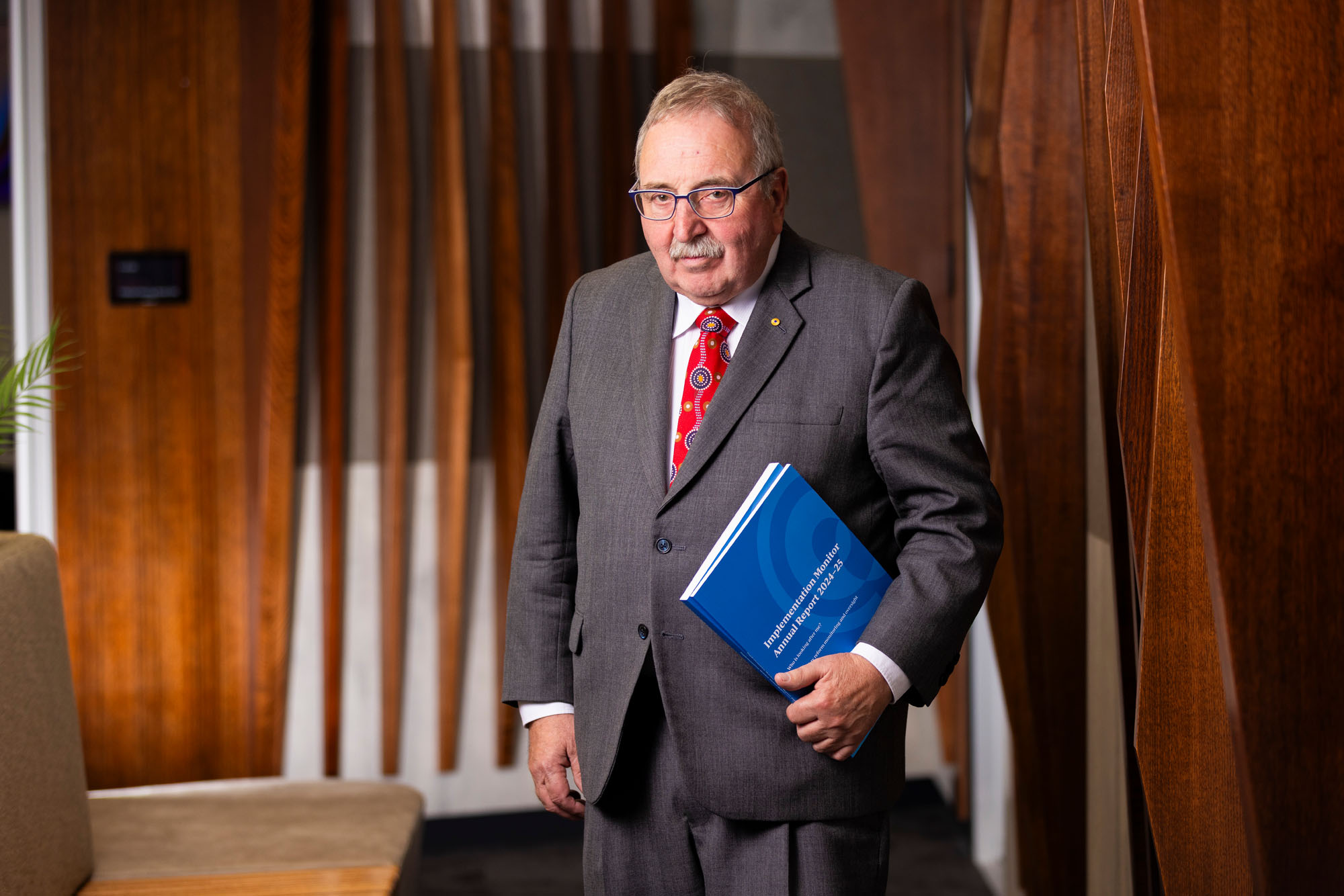
The Implementation Monitor will monitor, evaluate and report on the implementation of the Government response to the Commission of Inquiry. The objectives and powers of the Monitor are set out under the Child Safety Reform Implementation Act 2024 (the Act). The Act commenced on 6 November 2024.
Robert Benjamin was appointed to the position of the Child Safety Reform Implementation Monitor on 3 December 2024. The Monitor is initially being supported by a small team to set up the office.
As a new standalone statutory body, the independence of the Monitor is critical. It will ensure independent monitoring, evaluations and reporting on government activities related to the monitored recommendations.
Establishing the functions and foundations of the statutory body will take time. The significance and importance of this work cannot be underestimated. During the first year, the Monitor will be focused on:
- making sure that the statutory body has what it needs to perform an effective monitoring function
- delivering a framework that will publicly report on the Government’s activities
- preparing and publishing an annual report by 30 September.
The Implementation Monitor's priorities
Develop a Monitoring and Evaluation Framework
The Monitor has developed and published an Implementation Framework that will guide the work of the OIM; specifically the monitoring of recommendations, the appraisal of progress and the production of written reports for the Tasmanian Parliament. The framework will be developed in consultation with key stakeholders including:
- people with lived experience
- children and young people
- government agencies
- community organisations
The framework guides how the Government’s response to reform recommendations will be held accountable and made transparent. The framework allows the OIM to track progress against short, medium and long-term outcomes.
The effective monitoring and evaluation of activities will help us understand ‘what is working’ in preventing and responding to child sexual abuse. Through regular monitoring, review and reflection we will also learn ‘what isn’t working’. This will provide us - and those responsible for implementing reform - with the opportunity to change course if needed. The framework will be in place for the lifetime of the Act (up to 10 years). It will be updated over time to reflect changes, data highlights and learnings along the way.
The Implementation Framework was published in December 2025.
Independently report on the Government’s progress
Each year, the Monitor will report to Parliament on the progress of monitored recommendations. This report will include independent evaluation of the effectiveness and impact of measures and actions taken, especially around safety of children and young people in government and government-funded institutions. The reporting will focus on:
- the prevention of child sexual abuse
- institutional responses to child sexual abuse
- support of children who may experience such abuse.
In addition to annual reporting, the Monitor will also provide reports at 5 and 10 year intervals. These will evaluate the progress and effectiveness of monitored recommendations. The Monitor will prepare and publish any other reports or evaluations related to key areas of reform at their discretion.
Engage with stakeholders, victim-survivors and the community
The Monitor is responsible for ensuring accountability, and as far as possible, transparency in the implementation of monitored recommendations. As a priority, the Monitor will develop a stakeholder engagement and communications strategy. This will be published in 2026, and will help ensure all key stakeholders - including those with lived experience and children and young people - are engaged and consulted with for the life of the framework and beyond.